


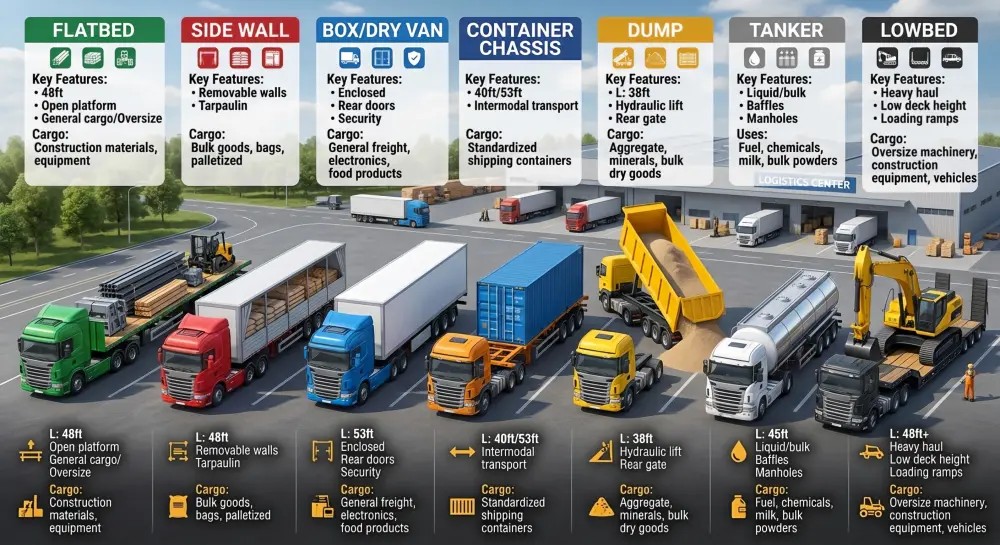
Types of Semi Trailers should be selected according to cargo dimensions, payload requirements, loading and unloading methods, road conditions, and the operating environment. A dump semi trailer is designed for bulk materials that require hydraulic unloading, while a flatbed or fence semi trailer handles general cargo. A lowbed trailer carries heavy machinery with high overall dimensions, and a container chassis transports standardized shipping containers. Box, refrigerated, tank, and other specialized trailers serve more specific freight requirements. Understanding these structural differences helps fleet operators, distributors, and procurement managers purchase equipment that matches their actual transport work rather than paying for unnecessary configurations.
For international buyers, the correct trailer configuration also affects vehicle registration, road compliance, shipping arrangements, maintenance costs, and long-term fleet utilization. Two trailers may have similar dimensions but perform very different jobs because of their chassis design, axle arrangement, suspension, braking system, and loading structure.
This guide explains seven major categories, their working structures, suitable cargo, practical advantages, and purchasing considerations. It is intended for commercial vehicle importers, logistics companies, construction contractors, mining operators, and trailer distributors evaluating equipment for domestic or international markets.
Need Help Identifying the Right Semi Trailer?
Send ZW Group your cargo type, required payload, loading method, destination country, and prime mover specifications. Our sales team can help identify a suitable trailer structure and discuss the available configurations.
What Are the Main Types of Semi Trailers?
The main types of semi trailers are classified by their cargo-carrying structure and intended transport application. For commercial fleet planning, seven broad categories provide a practical starting point: dump, fence, box, side wall or flatbed, lowbed, container chassis, and specialized semi trailers.
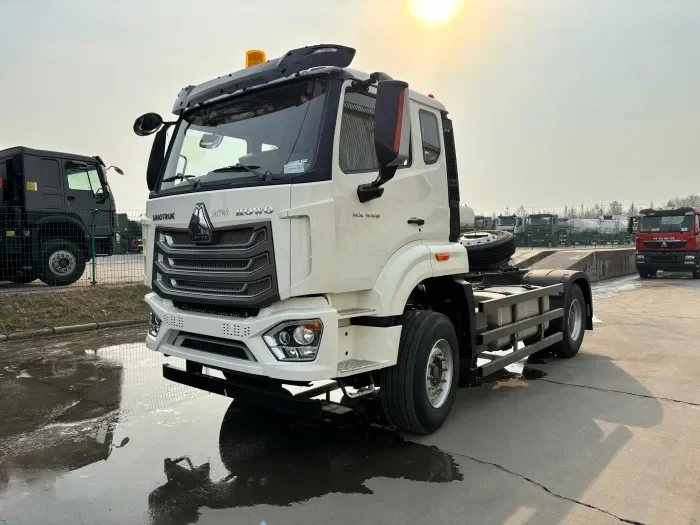
A semi trailer does not have its own powered engine. It connects to a prime mover through a fifth wheel and kingpin. The tractor unit provides traction and steering, while the trailer carries the cargo and transfers part of its vertical load through the coupling to the tractor. The trailer's axle group supports the remaining load.
This articulated combination makes semi trailers suitable for long-distance freight, construction logistics, mining transportation, container distribution, and specialized industrial operations. However, the trailer must be matched to the tractor's coupling height, fifth-wheel capacity, axle loading limits, braking connections, and electrical interfaces.
The categories above describe functional structures rather than a universal regulatory classification. Different markets may use different commercial names, body configurations, and vehicle registration categories. Buyers should confirm local terminology and applicable requirements before ordering.
1. Dump Semi Trailer: Which Structure Is Suitable for Bulk Cargo?
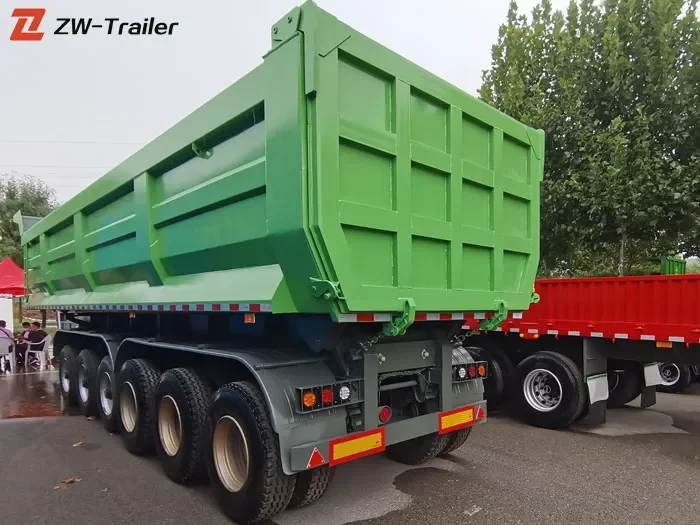
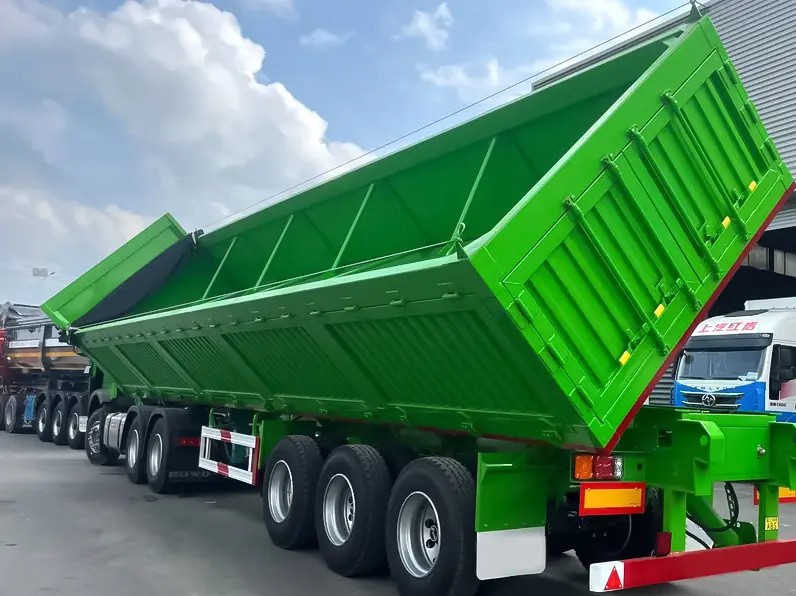
A dump semi trailer is designed to transport and discharge loose bulk materials using a hydraulic lifting system. It is widely used in construction, mining, quarry operations, infrastructure projects, and bulk material distribution. Unlike an ordinary side wall or flatbed trailer, it can raise its cargo body and unload material without requiring a separate mechanical unloading machine at the discharge point.
The basic assembly includes a main chassis, tipping body, hydraulic cylinder, hydraulic power connections, rear hinges, locking arrangements, suspension, axle group, and braking system. The hydraulic cylinder supplies the lifting force. As the body rises, the cargo moves toward the discharge opening under gravity.
What Is a Rear Tipping Dump Semi Trailer?
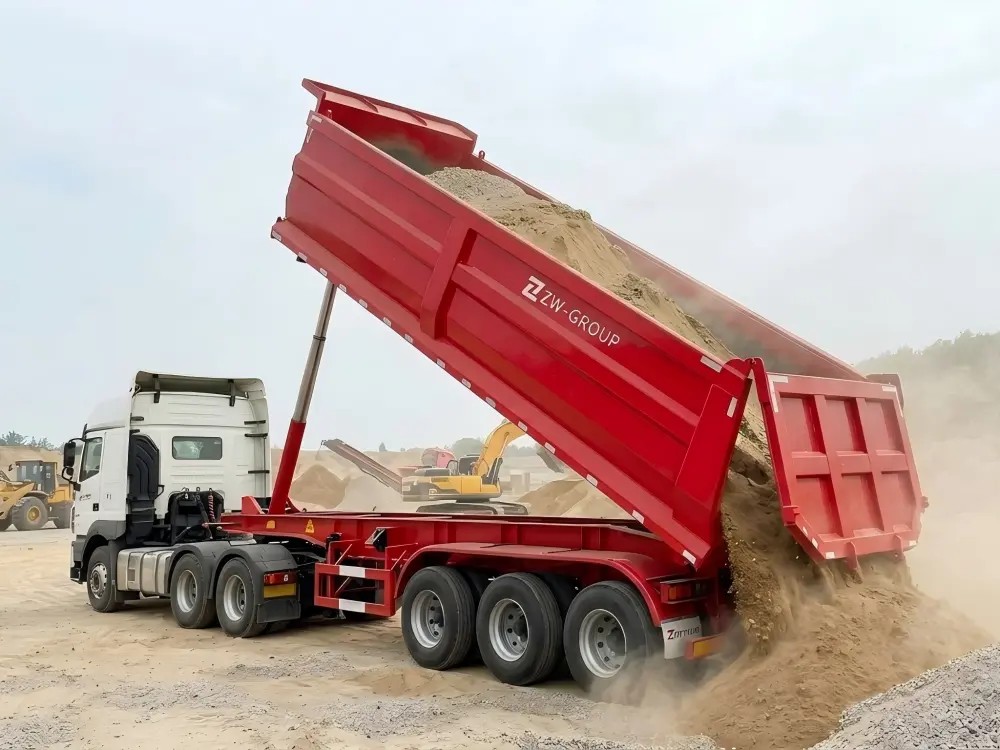
A rear tipping dump semi trailer raises its cargo body from the front, allowing the load to discharge through the rear opening. The body rotates around the rear hinge assembly. Front-mounted telescopic hydraulic cylinders are commonly used in this arrangement.
The front tipping structure is suitable for applications where the unloading area has limited lateral clearance. The vehicle needs sufficient space behind the trailer for the material to discharge, but it does not require the same side clearance as a side tipping design.
Typical cargo includes:
- Sand, gravel, and crushed stone for construction projects.
- Coal and other bulk materials handled at industrial sites.
- Soil, excavated material, and construction waste.
- Mineral materials transported between mines, stockyards, and processing facilities.
When Should Buyers Consider a Side Tipping Dump Trailer?
A side tipping dump semi trailer discharges cargo by tilting the body toward one side. Depending on the design, the body may tip to the left, right, or both sides. Its lower lifting height can be useful for certain long-body applications and unloading conditions.
The main operational requirement is adequate side clearance. The unloading surface must also be suitable for the lateral movement and changing load distribution during tipping. A side tipping configuration is not automatically safer in every operating environment; the ground condition, load distribution, tipping sequence, and trailer design all matter.
Hydraulic System and Chassis Considerations
The hydraulic system is one of the most important purchasing considerations for a dump trailer. Buyers should examine cylinder type, lifting arrangement, hydraulic connections, rated operating pressure, compatibility with the tractor's hydraulic supply, and the manufacturer's recommended operating procedure.
For a front tipping design, the cylinder must work with the body geometry and expected cargo load. A larger cylinder alone does not guarantee better performance. The lifting system must be engineered around the body dimensions, hinge position, structural reinforcement, and intended material density.
The chassis also requires attention. High-tensile steel may be specified for selected structural components, but the steel grade, thickness, cross-section, welding procedure, and load distribution must be evaluated together. Buyers should request the actual material and fabrication specifications rather than relying on a general claim of heavy-duty construction.
Hydraulic cylinder inspection should cover leakage, rod surface condition, mounting points, connection fittings, and smooth extension and retraction. Where cylinder pressure testing is part of the manufacturer's documented quality procedure, buyers can request the relevant inspection record and test conditions.
Before requesting a quotation, provide the cargo material, approximate bulk density, loading method, unloading direction, operating surface, and required body volume. These details are more useful for selecting a dump trailer than specifying volume alone.
2. Fence Semi Trailer: How Does It Handle General Cargo?
A fence semi trailer combines an open loading deck with removable or fixed side panels, vertical posts, and an upper rail structure. It is intended for general cargo that needs physical side restraint but does not require a fully enclosed cargo compartment.
Compared with an enclosed box trailer, its open construction allows flexible loading from the side or top. Forklifts, cranes, and other handling equipment can access the cargo depending on the loading arrangement and site conditions.
What Cargo Can a Fence Semi Trailer Transport?
Fence trailers are commonly used for medium- and long-distance general freight. Their cargo range depends on panel height, deck dimensions, load-securing arrangements, and the type of cargo being transported.
- Agricultural products: bagged grain, packaged produce, and selected farm products.
- Construction materials: bagged cement, bricks, packaged building materials, and equipment.
- Industrial goods: pallets, packaged components, and general factory cargo.
- Timber and related products: suitable loads when the side structure and restraint system are properly configured.
- Mixed freight: different cargo packages transported on the same route, subject to safe load distribution.
Fence Height, Posts, and Cargo Restraint
Fence height should be selected according to the cargo's dimensions and restraint requirements. Taller panels can help contain certain types of cargo, but they do not replace proper lashing, blocking, or load-securing equipment.
Vertical posts transfer loads from the side structure into the deck and supporting frame. Their spacing, connection method, and section dimensions should correspond to the expected lateral forces. Buyers should also check whether panels can be removed or folded, because this affects loading flexibility and maintenance.
For agricultural and general freight operations, a tarpaulin can be added where weather protection is required. A tarpaulin is not equivalent to a sealed roof or enclosed cargo body. Buyers transporting moisture-sensitive products should assess whether the fence configuration provides adequate protection during the complete journey.
Fence Semi Trailer vs. Flatbed Semi Trailer
The main difference is the side restraint structure. A fence semi trailer includes side panels and vertical supports, while a conventional flatbed has an open platform without permanent full-height side panels.
When a fleet regularly carries mixed cargo with varying dimensions, a fence structure can reduce the need to install separate side restraints for every load. For oversized or exceptionally long materials, removable or folding panels may provide more loading flexibility. The actual advantage depends on the cargo mix and the trailer's structural configuration.
For buyers comparing different types of semi trailers, the key question is not which structure looks more versatile. It is whether the side structure improves the fleet's loading efficiency without restricting the cargo dimensions and handling methods required by its main transport routes.
3. Box Semi Trailer: When Is an Enclosed Cargo Body Necessary?
A box semi trailer uses a fully enclosed cargo compartment to protect goods from direct exposure to rain, road dust, and unauthorized access. It is suitable for freight where cargo protection is more important than unrestricted loading access
The body may use corrugated panels, flat panels, or other structural materials depending on the intended application. Rear doors are common, while selected configurations may also include side access doors or a hydraulic tail lift.
What Are the Main Applications of a Box Semi Trailer?
Box trailers are used for parcel distribution, packaged consumer goods, household appliances, furniture, electronics, and other general freight that benefits from an enclosed transport environment.
For high-value packaged cargo, the enclosed structure can reduce exposure to weather and casual access during transportation. However, it does not automatically provide temperature control, humidity regulation, or specialized security certification. These functions require additional equipment and verified specifications.
Important Body and Loading Configurations
A tail lift can improve loading and unloading at warehouses without a dedicated loading dock. However, its capacity, platform dimensions, power requirements, and maintenance arrangements should be confirmed before purchase.
Box Trailer vs. Refrigerated Semi Trailer
A standard box trailer protects cargo from direct external exposure, but it does not maintain a controlled temperature. A refrigerated semi trailer uses an insulated body and refrigeration equipment to manage the cargo compartment temperature within its designed operating range.
Buyers transporting fresh food, frozen products, pharmaceuticals, or temperature-sensitive goods should not substitute a standard enclosed trailer for a refrigerated unit. The required temperature range, cooling capacity, insulation performance, airflow arrangement, and operating environment must be specified separately.
4. Flatbed and Side Wall Semi Trailer: Which Is Better for Open-Deck Freight?
Flatbed and side wall semi trailers are designed for cargo that can be loaded onto an open platform. Their main advantages are loading flexibility, access for cranes and forklifts, and the ability to transport goods with different shapes and dimensions.
A flatbed trailer has a relatively open deck with no permanent full-height cargo enclosure. A side wall semi trailer adds side panels that provide a physical boundary for suitable cargo. Depending on the design, the panels may be removable or foldable.
What Materials Can These Trailers Carry?
- Steel coils, steel plates, and structural steel sections, with suitable supports and restraint systems.
- Steel pipes, construction timber, and long building materials.
- Industrial machinery and packaged equipment within the deck and axle limits.
- Bagged products and palletized cargo.
- General commercial freight and selected agricultural materials.
The open deck makes overhead loading possible where cranes are available. Side access is also useful when cargo is loaded with forklifts. For long materials, an open platform avoids some of the dimensional restrictions associated with enclosed bodies.
Why Are Side Wall Configurations Useful?
Side walls provide additional physical restraint and help organize certain cargo types. A removable or foldable arrangement can be useful when a fleet handles both regular packaged freight and oversized materials.
However, side walls should not be treated as the primary securing system for every load. Cargo must still be secured according to its weight, shape, center of gravity, friction characteristics, and applicable transport regulations. Chains, straps, edge protectors, blocking devices, and other restraint equipment may be required.
How to Check the Main Structure
When comparing these types of semi trailers, procurement teams should examine the main beam, crossmembers, deck construction, suspension mounting points, kingpin area, and rear axle group.
The main beam carries a major share of the structural load. Its section, material, reinforcement, and fabrication quality influence the trailer's ability to resist bending and repeated operational stress. Crossmembers support the deck and transfer loads into the main longitudinal structure.
Deck material should match the cargo and handling equipment. A timber floor, steel plate, or other deck configuration may be appropriate depending on the application. Buyers should also check the deck's usable width, working length, tie-down points, and any restrictions created by the side wall structure.
Flatbed or Side Wall? Make the Decision Based on Cargo.
Choose a flatbed when unrestricted loading access and oversized cargo flexibility are priorities. Choose a side wall configuration when the fleet frequently carries cargo that benefits from a defined side boundary.
5. Lowbed Semi Trailer: How Does It Transport Heavy Construction Machinery?
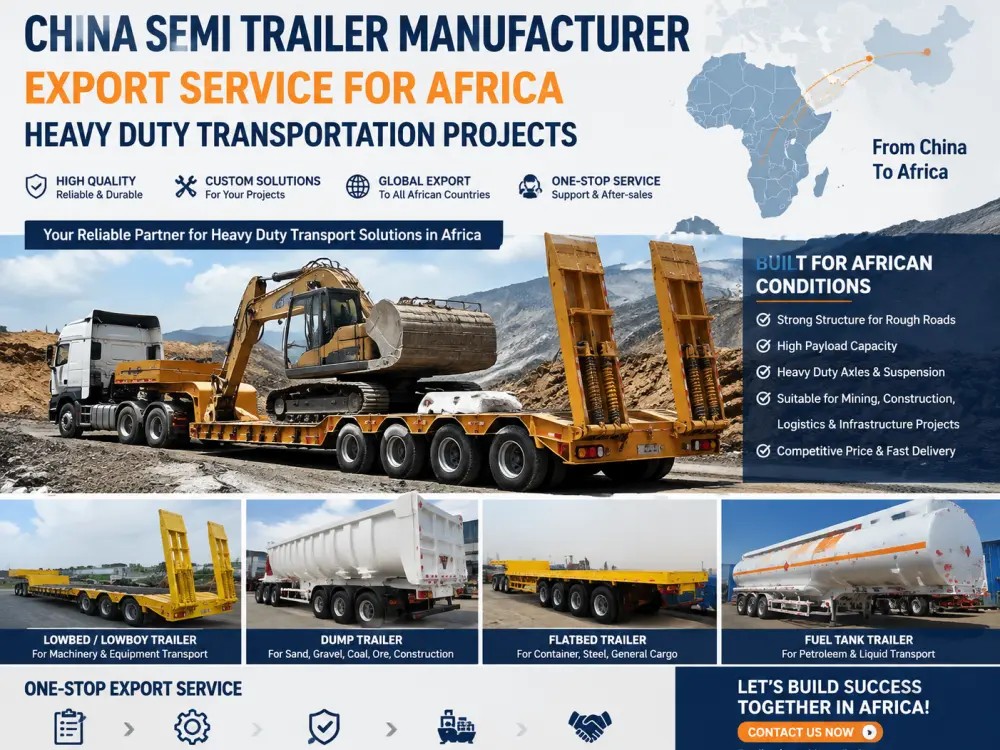
A lowbed semi trailer is designed to carry heavy equipment and machinery with relatively high overall dimensions. Its loading platform sits lower than that of a conventional flatbed trailer, helping reduce the combined transport height of the cargo and trailer.
This structure is particularly useful for construction machinery, mining equipment, industrial machinery, and oversized equipment that cannot be transported efficiently on a standard open-deck trailer.
What Is the Function of a Gooseneck Structure?
Many lowbed trailers use a gooseneck arrangement to lower the main loading deck. The front section connects to the tractor through the kingpin and fifth wheel, while the lower deck accommodates machinery and equipment.
The exact arrangement varies by design. Some configurations use detachable goosenecks, while others have fixed structures. A detachable gooseneck can allow equipment to be loaded from the front after the gooseneck is disconnected, subject to the specific design and operating procedure.
Typical Cargo for Lowbed Trailers
- Hydraulic excavators used in earthmoving and mining operations.
- Bulldozers and crawler-type construction machinery.
- Motor graders, road rollers, and other road construction equipment.
- Wheel loaders and selected heavy industrial machines.
- Generators, transformers, and large industrial equipment.
Why Is Loading Height So Important?
Transport height is a critical factor when moving tall machinery. A lower deck can help reduce the total vehicle height, potentially making it easier to comply with route-specific clearance limits.
However, deck height alone does not determine whether a load can travel legally. Buyers must calculate the combined height of the tractor, trailer, and loaded machinery. Bridge clearances, overhead cables, tunnel restrictions, road gradients, turning radii, and local permit requirements may all affect the route.
Axle Configuration and Load Distribution
Lowbed trailers may use different axle arrangements depending on the intended payload and market requirements. Two-, three-, four-, or more axle configurations may be available in different product ranges, but axle quantity must not be selected independently of axle ratings, suspension capacity, tire specifications, load distribution, and legal axle limits.
For machinery with a concentrated center of gravity, loading position is especially important. An incorrectly positioned excavator can create excessive loading on one axle group or impose an unsuitable kingpin load on the tractor.
Before ordering, buyers should provide the machinery's operating weight, transport dimensions, track width, ground clearance, center-of-gravity information where available, and loading method. These details help determine deck length, deck width, ramp arrangement, and axle layout.
Lowbed Trailer vs. Flatbed Trailer
A flatbed is a practical solution for general open-deck freight. A lowbed is more suitable when cargo height and machinery loading requirements make a conventional deck unsuitable. The lowbed's structural complexity and specialized design are justified when the fleet regularly transports heavy equipment.
For occasional machinery movements, the buyer should also compare the cost of owning a dedicated lowbed with outsourcing specialized transportation. The decision depends on annual transport frequency, equipment availability, route restrictions, and the commercial value of keeping machinery movements under direct fleet control.
6. Container Chassis Trailer: What Should Importers and Logistics Companies Know?
A container chassis trailer is an open-frame transport platform designed to carry standardized shipping containers. Instead of a complete cargo body, it uses a chassis structure with container locking devices, commonly called twist locks, positioned to secure the container at designated corner castings.
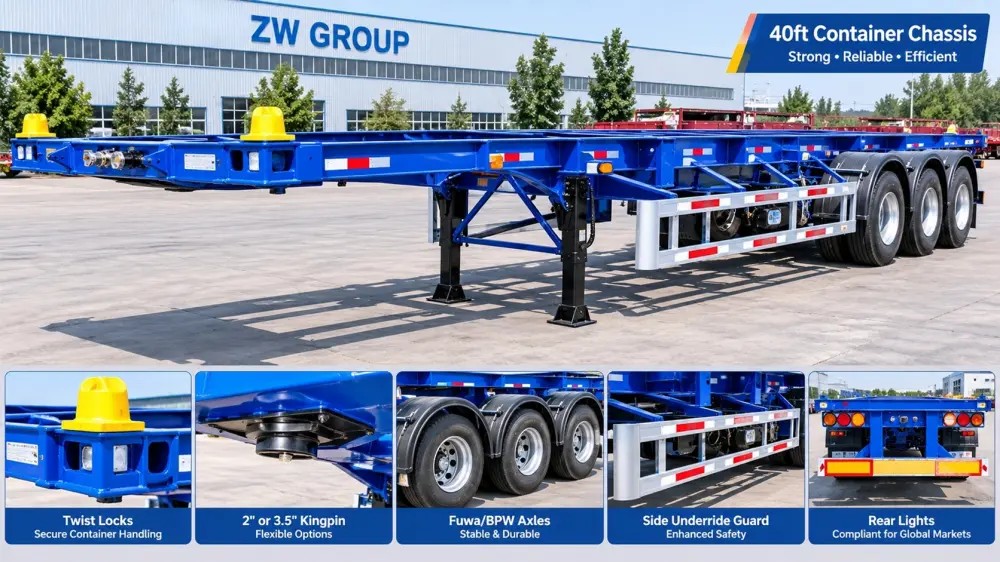
This trailer type is widely used in port drayage, inland container transportation, freight distribution, and intermodal logistics. Its open construction allows a shipping container to be transferred between different transport modes without unloading the cargo itself.
How Do Container Twist Locks Work?
Twist locks secure the container by engaging with the corner castings. The locking arrangement must correspond to the container length and the chassis design. Operators should verify that all required locks are correctly positioned and secured before transport.
The locking devices are critical safety components. Their condition, operation, mounting points, and compatibility with the intended container configuration should be included in routine inspections.
20-Foot vs. 40-Foot Container Chassis
Container chassis configurations are designed around the container dimensions they are intended to carry. Some chassis are dedicated to a specific container length, while extendable or multi-position designs can accommodate more than one configuration.
The correct configuration depends on the container fleet, loading terminal, road regulations, and transport contract. Buyers should confirm the actual container types and dimensions rather than assuming that every chassis can accommodate all container combinations.
What Should Be Inspected on a Container Chassis?
- Main longitudinal beams and crossmember connections.
- Twist lock positions, locking operation, and mounting integrity.
- Kingpin and fifth-wheel compatibility with the tractor.
- Axle group, suspension, wheel rims, and tire specifications.
- Air brake components, ABS equipment where fitted, and electrical connections.
- Rear lighting, reflective markings, and market-specific safety equipment.
For container transport fleets, equipment uptime is directly connected to the ability to complete port and warehouse movements on schedule. Buyers should evaluate spare parts availability, local maintenance support, and the standardization of components across the fleet.
7. Specialized Semi Trailers: Which Designs Serve Specific Industries?
Specialized semi trailers are designed around cargo characteristics or operating processes that ordinary open-deck and enclosed trailers cannot adequately support. Their structures may include tanks, insulated compartments, refrigeration equipment, powder discharge systems, vehicle-support decks, or other application-specific assemblies.
These products should be selected according to cargo properties, loading and unloading facilities, safety requirements, and destination-country regulations. The word specialized does not describe one universal trailer structure; it covers several distinct equipment categories.
7.1 Tank Semi Trailer
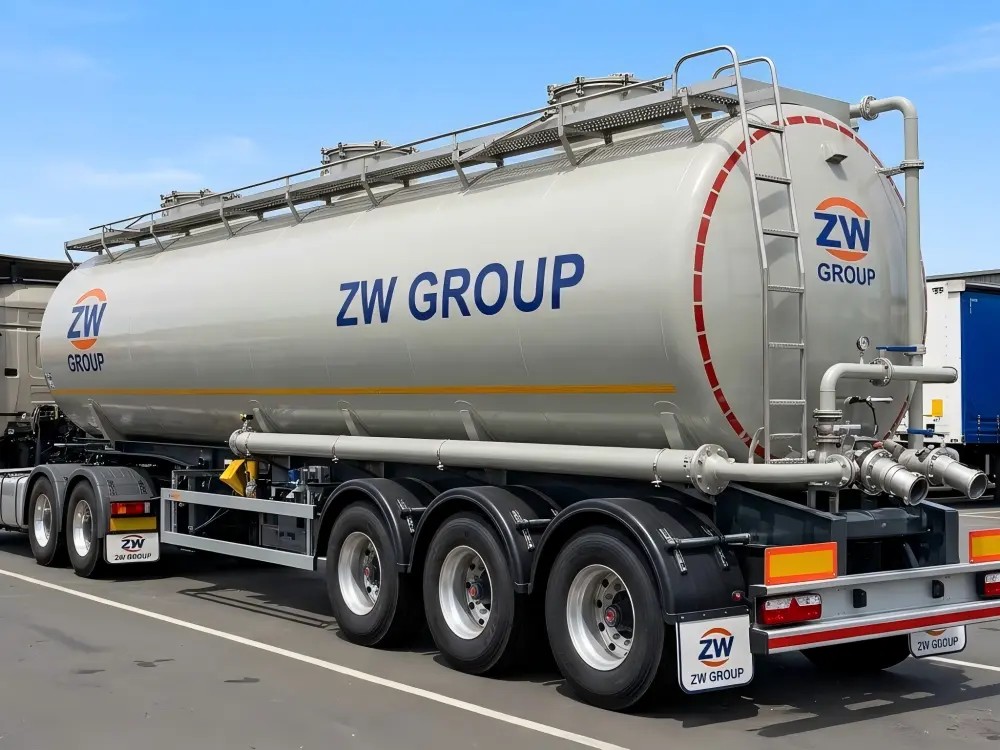
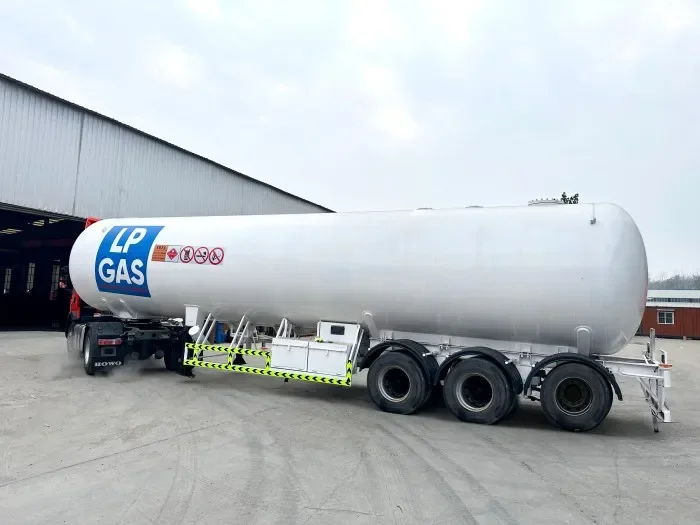
A tank semi trailer carries liquid cargo in a dedicated tank body. Depending on the design and regulatory approval, applications may include petroleum products, fuel, industrial liquids, food-grade liquids, or other compatible materials.
The tank body, internal structure, valves, piping, discharge connections, manholes, pressure-relief arrangements, and supporting chassis must be matched to the cargo. Material compatibility is essential. A tank designed for one liquid should not automatically be assumed suitable for another.
For fuel transportation, procurement teams should identify the cargo classification, required tank capacity, compartment arrangement, material specifications, valve configuration, and applicable dangerous-goods requirements. Certification and inspection obligations vary by country and cargo classification.
7.2 Refrigerated Semi Trailer
A refrigerated semi trailer is built to transport goods requiring temperature management. Its principal components include an insulated cargo body, refrigeration unit, doors, seals, airflow arrangements, and temperature monitoring equipment.
Fresh food, frozen products, and other temperature-sensitive goods may require different operating temperatures and airflow arrangements. The buyer should specify the target temperature, ambient conditions, cargo loading pattern, door-opening frequency, and expected journey duration.
Refrigeration capacity should be assessed against actual operating conditions rather than selected solely by trailer volume. A unit that performs adequately in a moderate climate may require a different specification for routes with sustained high ambient temperatures.
7.3 Bulk Powder and Cement Semi Trailer
A bulk powder tanker transports dry materials such as cement, fly ash, and selected industrial powders. It commonly uses pneumatic conveying equipment to discharge material into storage silos.
The system may include a tank body, compressor connection, air piping, discharge valves, fluidization components, and pressure-related safety devices. Cargo characteristics influence the tank design and unloading process.
Buyers should confirm the powder's flow properties, bulk density, moisture sensitivity, discharge destination, compressor requirements, and operating procedure. A tanker configuration suitable for one powder may not achieve the same discharge performance with another material.
7.4 Car Carrier Semi Trailer
A car carrier semi trailer transports passenger vehicles and selected light commercial vehicles. Its design may use one or more loading levels, adjustable platforms, ramps, and wheel-restraint systems.
The deck arrangement must accommodate vehicle length, width, height, wheelbase, and ground clearance. Buyers should consider the range of vehicle models in their transport fleet rather than designing the trailer around only one vehicle type.
Vehicle loading sequence, ramp angle, platform adjustment, restraint points, and total transport height all affect operating efficiency. Route restrictions and local vehicle-carrier regulations should be checked before purchasing a multi-level structure.
How to Choose Between Different Types of Semi Trailers
The correct purchasing decision starts with the transport task, not the trailer's advertised payload or body volume. A trailer should be evaluated as part of the complete tractor-trailer combination and the route on which it will operate.
Step 1: Identify the Actual Cargo
Record the cargo's physical form, dimensions, weight, density, packaging, and center of gravity where relevant. Bulk materials require particular attention to density and loading distribution. Machinery requires transport dimensions and loading information. Container operations require standardized container compatibility.
For mixed freight, use the most common and commercially important cargo profiles. Do not choose a specialized structure solely because it can carry an occasional load if that structure reduces the fleet's ability to handle its regular work.
Step 2: Confirm the Loading and Unloading Method
The handling process often determines the trailer structure. A site using a crane may favor an open-deck trailer. A warehouse with a loading dock may operate efficiently with an enclosed box trailer. A mining site that discharges loose material directly may require a hydraulic dump trailer.
- Hydraulic tipping: dump semi trailer.
- Overhead crane loading: flatbed or suitable side wall trailer.
- Forklift loading: flatbed, fence, box, or side-access configuration.
- Container terminal handling: container chassis.
- Self-propelled machinery loading: suitable lowbed ramps or detachable gooseneck.
- Specialized liquid or powder discharge: dedicated tank or bulk tanker.
Step 3: Check the Prime Mover Compatibility
A trailer that fits the cargo may still be unsuitable if it does not match the tractor unit. Buyers should verify the fifth-wheel height, kingpin specification, allowable kingpin load, tractor axle capacities, electrical interfaces, air brake connections, and hydraulic supply where required.
For a dump trailer, the tractor may need a compatible hydraulic system and the correct connection arrangement. For a conventional box or flatbed trailer, the primary interfaces are typically the mechanical coupling, braking, and electrical systems.
Step 4: Calculate Payload and Axle Distribution
Payload should be assessed using the complete vehicle combination and the applicable legal limits. A trailer's nominal load rating does not mean that the same cargo weight can be carried legally on every road.
The calculation should account for the trailer's tare weight, tractor specifications, cargo weight, axle group ratings, tire load capacity, suspension design, kingpin load, and local gross combination weight restrictions.
For example, a trailer with a high theoretical structural capacity may still be restricted by the tractor's coupling capacity or the permitted axle loads on a particular route. This is why procurement specifications should include the intended tractor model or at least its relevant technical parameters.
Step 5: Consider Road and Site Conditions
Road conditions influence the required chassis, suspension, tire, and ground-clearance configuration. A trailer operating mainly on paved highways has different service requirements from equipment used on rough mine access roads or construction sites.
For overseas buyers, consider:
- Road surface and typical operating terrain.
- Bridge weight restrictions and route clearance.
- Ambient temperature and exposure to dust or moisture.
- Availability of maintenance workshops and replacement parts.
- Local vehicle inspection, registration, and import requirements.
- Port handling, shipping dimensions, and inland delivery arrangements.
Step 6: Evaluate Maintenance and Total Operating Cost
Purchase price is only one part of the fleet's long-term cost. Buyers should consider tire replacement, brake maintenance, suspension components, hydraulic repairs, corrosion protection, spare parts availability, and expected operating downtime.
Standardized axles, brake components, suspension parts, and electrical connections can simplify maintenance across a fleet, provided the selected components meet the actual operating and regulatory requirements.
For specialized trailers, maintenance planning is especially important. Refrigeration units, hydraulic tipping systems, pneumatic powder discharge equipment, and tank valves each require different inspection and service procedures.
Before and After: What Changes When the Trailer Matches the Cargo?
The commercial value of choosing the right trailer becomes clearer when procurement decisions are compared with the actual operating task.
These examples illustrate equipment selection principles, not guaranteed financial savings or performance results. Actual productivity depends on the loading site, route, cargo characteristics, operator training, and fleet management.
What Technical Components Should Buyers Inspect Before Ordering?
Regardless of the selected category, the running gear and chassis determine whether the trailer can perform reliably under its intended working conditions. A procurement team should examine the following systems instead of comparing trailers only by appearance.
Main Beam and Chassis Structure
The main beam is a primary load-bearing component. Buyers should ask about its cross-section, material grade, thickness, reinforcement design, welding process, and corrosion protection. The chassis should be designed for the intended cargo distribution and operating conditions.
For dump and lowbed trailers, the structural design must also accommodate application-specific stresses associated with tipping or concentrated machinery loads.
Axles and Suspension
The axle group supports the trailer load and transfers forces from the wheels to the chassis. Buyers should confirm the axle brand or specification, rated capacity, brake arrangement, wheel-end configuration, and compatibility with locally available replacement parts.
Suspension options may include mechanical leaf-spring or air suspension arrangements, depending on the market and intended use. Selection should reflect payload, terrain, maintenance capability, and local operating regulations.
Braking System and ABS
The braking system should be compatible with the tractor and the destination market. Buyers should confirm the brake type, chamber configuration, air reservoir arrangement, piping, control connections, and ABS or other required electronic braking equipment where applicable.
Disc and drum brakes have different maintenance characteristics. The appropriate choice depends on the operating environment, vehicle specification, service availability, and regulatory requirements. Neither should be treated as universally superior without considering the application.
Kingpin and Fifth Wheel
The kingpin connects the trailer to the tractor's fifth wheel. Its specification, mounting structure, position, and allowable load must match the tractor. Incorrect coupling compatibility can create serious operational and safety problems.
Tires, Wheels, and Electrical Equipment
Tire dimensions, load ratings, speed ratings, wheel specifications, and availability should be checked against the intended operating conditions. Electrical equipment should include compatible lighting, connectors, wiring protection, and any market-specific monitoring or safety devices.
How Does Destination Country Affect Semi Trailer Selection?
Export buyers should finalize the destination market's technical and legal requirements before confirming a production specification. A configuration that is suitable for one country may require changes before it can be registered or operated in another.
Vehicle Dimensions and Weight Limits
Overall length, width, height, gross combination weight, axle loads, and coupling arrangements are subject to local regulations. These limits may affect the trailer's deck dimensions, axle quantity, body configuration, and usable payload.
Climate and Operating Environment
High ambient temperatures can affect tire performance, brake operating conditions, hydraulic oil behavior, and refrigeration demand. Dusty mining environments can increase maintenance requirements for moving components and pneumatic systems.
For coastal routes, corrosion protection deserves attention because of moisture and salt exposure. Buyers should discuss surface preparation, coating systems, and maintenance expectations rather than treating paint color as a substitute for corrosion protection.
Import Documentation and Customs Clearance
Before shipment, importers should confirm the applicable customs classification, commercial invoice requirements, packing list, bill of lading, certificate of origin where required, and any vehicle-specific import approvals. Used vehicle and special-purpose vehicle regulations may differ significantly between markets.
For specialized equipment, additional technical documents or inspection certificates may be required. Buyers should coordinate with their customs broker and local authorities before production is completed, particularly where the trailer includes a tank, pressure-related equipment, refrigeration machinery, or other regulated components.
Shipping and Delivery Arrangements
Trailer dimensions and configuration can influence the available shipping method and freight cost. Depending on the product, export arrangements may involve Ro-Ro transportation, containerized shipment for suitable configurations, or other breakbulk and project-cargo arrangements.
Before confirming an order, buyers should provide the destination port, inland delivery location, preferred shipping method where known, and any dismantling or assembly restrictions. The final shipping plan should be confirmed against actual cargo dimensions and carrier requirements.
Why Work with ZW Group for Semi Trailer Procurement?
ZW Group supplies commercial vehicle and semi trailer solutions for overseas buyers. For fleet operators, distributors, and project contractors, the procurement process should begin with a clear understanding of the intended application and end with an agreed technical configuration.
Rather than selecting a trailer solely by its category name, buyers should establish the relationship between the cargo, prime mover, road environment, loading equipment, and destination-market requirements.
Application-Based Configuration Discussion
Different types of semi trailers require different technical discussions. A dump trailer needs attention to its hydraulic lifting system and body structure. A lowbed requires machinery dimensions, loading geometry, and axle distribution. A container chassis needs compatible locking positions and a suitable frame configuration.
ZW Group can discuss these application requirements with buyers before a quotation is finalized, helping both sides establish the scope of the requested equipment.
Export-Oriented Procurement Communication
For international orders, the technical specification should be clear enough for purchasing, production coordination, shipping preparation, and import documentation. Buyers should confirm the product configuration, component brands where specified, spare parts requirements, and documentation scope in the purchase agreement.
Information to Prepare for a Quotation
To receive a more relevant quotation, prepare the following information:
- Trailer category: dump, fence, box, flatbed, lowbed, container chassis, or specialized trailer.
- Cargo information: material type, dimensions, weight, and transport frequency.
- Required capacity: target payload or cargo volume, subject to legal and engineering verification.
- Prime mover: tractor brand, model, axle configuration, fifth-wheel height, and coupling specifications.
- Operating conditions: highway, mining road, construction site, port, or mixed operation.
- Destination: country, port, and applicable registration or import requirements.
- Configuration preferences: axle arrangement, suspension, brake system, tires, and additional equipment.
Get a Semi Trailer Configuration and Quotation
Tell us what you transport, where the trailer will operate, and which tractor unit you use. ZW Group can discuss suitable trailer structures and export configurations based on your requirements.
WhatsApp: +86 186 7877 3290
Frequently Asked Questions About Types of Semi Trailers
1. What are the seven main types of semi trailers?
The seven broad categories covered in this guide are dump, fence, box, flatbed or side wall, lowbed, container chassis, and specialized semi trailers. Each category serves different cargo and handling requirements.
2. Which type of semi trailer is best for construction materials?
The answer depends on the material and loading method. A dump semi trailer is suitable for loose sand, gravel, soil, and similar bulk materials. A flatbed or side wall trailer is more suitable for steel, pipes, timber, and packaged construction materials.
3. What is the difference between a dump semi trailer and a side wall semi trailer?
A dump semi trailer uses a hydraulic system to raise its cargo body for unloading. A side wall semi trailer has an open loading platform with side panels and normally relies on external equipment for loading and unloading.
4. What is the difference between a flatbed and a fence semi trailer?
A flatbed uses an open deck without permanent full-height side panels. A fence semi trailer adds vertical posts, side panels, and upper rails to create a more defined cargo enclosure while retaining open loading access.
5. Can a box semi trailer transport refrigerated goods?
A standard box trailer is not a substitute for a refrigerated trailer. Temperature-sensitive cargo requires a suitable insulated body, refrigeration equipment, and a specified temperature-management system.
6. Which semi trailer is suitable for transporting excavators?
A lowbed semi trailer is generally suitable for transporting excavators and other heavy construction machinery. The final configuration should be based on machine weight, dimensions, loading method, axle distribution, and route restrictions.
7. Can one container chassis carry both 20-foot and 40-foot containers?
Some extendable or multi-position container chassis designs can accommodate different container lengths. A fixed chassis may be designed for a specific configuration. Buyers should verify the actual twist-lock positions and manufacturer specifications.
8. What factors affect the price of different types of semi trailers?
Price depends on the trailer structure, dimensions, payload design, steel specifications, axle and suspension components, braking system, tires, hydraulic or specialized equipment, and export requirements. A useful quotation comparison should use the same technical configuration and delivery conditions.
9. How many axles should a semi trailer have?
There is no single axle configuration suitable for every application. The required arrangement depends on the trailer's gross weight, load distribution, axle ratings, tire capacity, suspension, tractor compatibility, and local road regulations.
10. What information should I send when requesting a semi trailer quotation?
Provide the trailer category, cargo type, required payload, cargo dimensions, tractor model, destination country, and preferred configuration. For specialized trailers, also provide the required loading and unloading method and relevant cargo specifications.
11. Are all types of semi trailers suitable for international export?
Many trailer structures can be supplied for export, but the final specification must comply with the destination market's import, registration, road-use, and technical requirements. Buyers should verify these conditions before placing an order.
12. How do I choose between a standard trailer and a specialized trailer?
Choose a standard open-deck, fence, or box structure when it can handle the fleet's regular cargo safely and efficiently. Choose a specialized trailer when the cargo requires a dedicated containment, temperature-control, tipping, pneumatic discharge, or machinery-loading system.
Final Procurement Checklist: Confirm These Details Before Ordering
A technically suitable trailer should match the cargo, prime mover, operating route, and destination-market requirements. Before issuing a purchase order, buyers should confirm the following items with the supplier.
- Trailer category and intended transport application.
- Overall dimensions and usable loading dimensions.
- Payload target and relevant axle loading requirements.
- Main beam and chassis structural specifications.
- Axle brand, model, quantity, and rated capacity.
- Suspension type and braking configuration.
- Kingpin and fifth-wheel compatibility.
- Tire, wheel, and electrical specifications.
- Hydraulic, refrigeration, tank, or pneumatic systems where applicable.
- Destination-country compliance and import documentation.
- Spare parts, maintenance requirements, and warranty terms.
- Production specification, inspection scope, and shipping arrangements.
Understanding the different types of semi trailers is the first step toward building an efficient commercial transport fleet. The best purchasing decision is the one that matches the trailer structure to the actual cargo, handling equipment, tractor unit, and route. A properly specified trailer can reduce unnecessary handling operations, simplify fleet maintenance, and support more predictable transport planning.
For distributors, fleet operators, and project buyers, ZW Group welcomes inquiries about dump, fence, box, flatbed, lowbed, container chassis, and specialized semi trailer configurations.
Contact ZW Group:
WhatsApp: +86 186 7877 3290