


Semi Trailer Selection: How to Choose the Right Trailer for Your Business
Semi trailer selection should begin with the cargo, operating route, loading method, and prime mover—not simply the advertised payload or factory price. A suitable trailer must carry the intended load within applicable limits, connect correctly to the tractor unit, accommodate the loading and unloading process, and meet the destination market's technical and regulatory requirements. Buyers who establish these conditions before requesting quotations can compare configurations more accurately and reduce the risk of purchasing equipment that does not fit their actual operation.
For importers, fleet operators, distributors, construction contractors, and logistics companies, semi trailer selection is a commercial decision as much as an engineering decision. The wrong body design can slow cargo handling. An unsuitable axle arrangement can create load-distribution or compliance problems. Incompatible coupling dimensions can prevent a trailer from working with an existing tractor fleet. Limited spare-parts availability can also turn a lower initial purchase price into higher operating costs.
This guide explains how to select a semi trailer by cargo type, payload, body volume, axle configuration, chassis structure, braking system, prime mover compatibility, road conditions, export documentation, and lifecycle cost. It also provides a practical procurement checklist that buyers can use when comparing suppliers and preparing a specification for ZW Trailer.
Send your cargo type, maximum load, destination country, and prime mover specifications. These details help establish a practical starting point for semi trailer selection.
Discuss Your Requirements on WhatsApp
What Information Is Required Before Semi Trailer Selection?
A reliable semi trailer selection process requires six groups of information: cargo characteristics, loading and unloading conditions, tractor specifications, operating routes, destination regulations, and lifecycle costs. These inputs should be collected before a supplier finalizes the configuration. If one critical condition is missing, the proposed trailer may need to be redesigned or may prove unsuitable for the intended service.
The six-point procurement checklist
- Cargo: Record the cargo name, individual and total weight, dimensions, center of gravity, density where relevant, weather-protection needs, hazardous classification where applicable, and required securing method.
- Loading and unloading: Identify forklifts, cranes, ramps, loading docks, discharge equipment, platform height, ground conditions, access direction, and available maneuvering space.
- Prime mover: Confirm the tractor model, axle configuration, fifth wheel, kingpin compatibility, permitted coupling load, towing limits, brake connections, and electrical interfaces.
- Routes: Check bridge restrictions, road gradients, turning radius, overhead clearance, road surfaces, port access, construction-site access, and any oversize or overweight permit requirements.
- Compliance: Identify the destination's current requirements for dimensions, gross mass, axle loads, brakes, lighting, inspection, certification, registration, and vehicle documents.
- Operating cost: Estimate tire replacement, brake maintenance, suspension service, hydraulic maintenance where applicable, spare-parts availability, workshop capability, downtime, and transport efficiency.
The information should be specific enough to distinguish between alternative configurations. “A heavy-duty trailer for Africa,” for example, does not establish the intended payload, road conditions, cargo restraint requirements, or applicable local mass limits. “A three-axle flatbed carrying steel products, with a specified tractor model and regular port-to-warehouse routes” gives a supplier a more useful engineering and commercial starting point.
Which Semi Trailer Type Should You Choose?
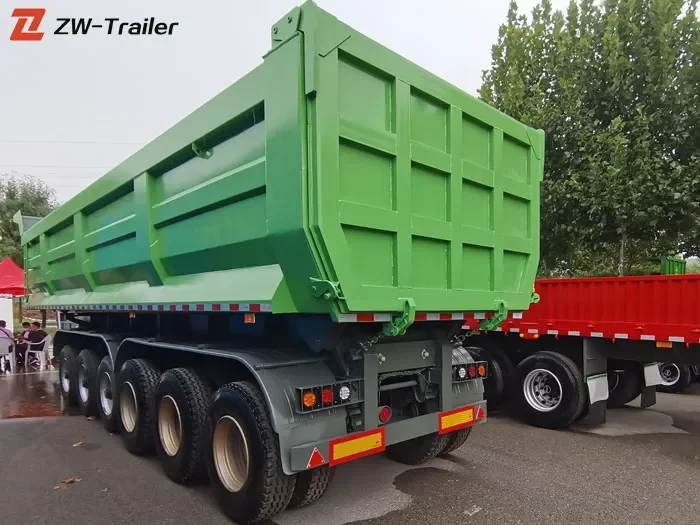
The correct semi trailer type is determined by the physical characteristics of the cargo and the way it must be handled. A flatbed is suitable for many loads that require open-deck access. A side wall trailer can support suitable general cargo that benefits from a bounded loading area. A tipper is designed for bulk materials that can be discharged by tilting the body. A lowbed trailer accommodates machinery when deck height, loading geometry, and axle distribution are appropriate.
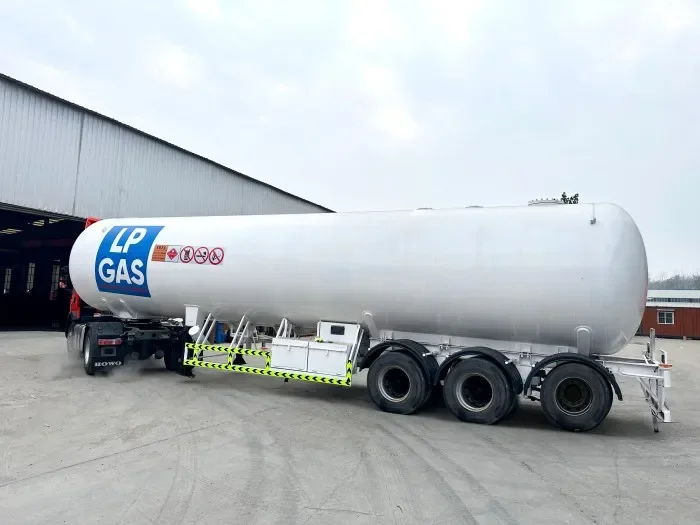
Fuel tankers and other tank trailers require a different assessment because the transported medium, tank design, valves, compartments, and safety provisions influence the specification. Container chassis trailers are selected around container dimensions, locking positions, terminal handling arrangements, and legal mass distribution. These designs should not be treated as interchangeable merely because their dimensions appear similar.
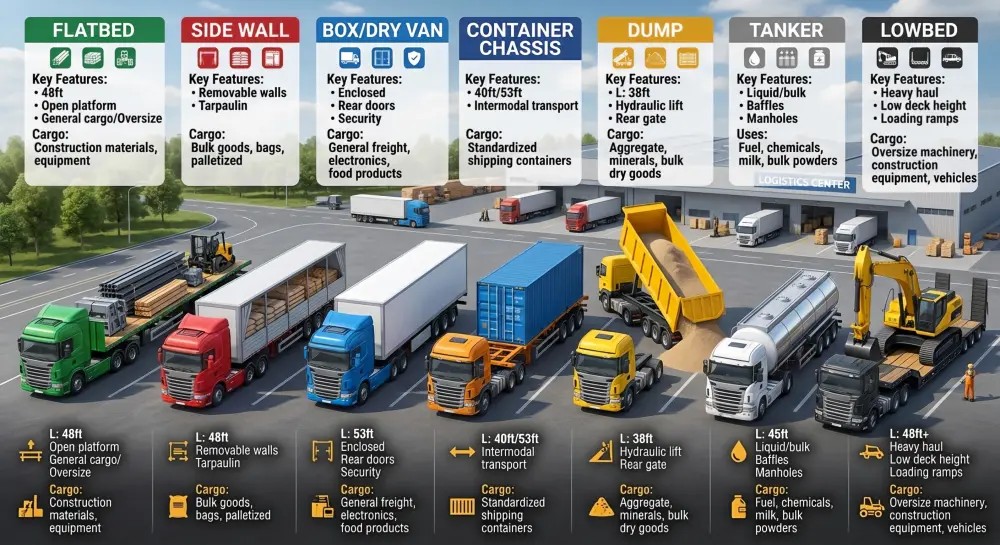
When is a flatbed preferable to a side wall trailer?
A flatbed is often the more practical option when cargo dimensions vary, cranes need unobstructed access, or loading and unloading occur from several directions. Steel sections, machinery, and certain construction materials may be transported on a flatbed when their weight, contact points, and securing arrangements are compatible with the design.
A side wall trailer may be better for regular loads of packaged products or other freight that benefits from a physical boundary. However, side walls do not replace proper cargo restraint, and their height and structure must suit the loading equipment. If the operation frequently carries unusually wide or tall cargo, the buyer should assess whether the walls restrict access or create handling difficulties.
When does a lowbed trailer make more sense?
A lowbed trailer is appropriate when machinery transport requires a lower loading platform or a configuration designed for heavy equipment. Before choosing one, confirm the machine's operating weight, transport dimensions, track or wheel arrangement, center of gravity, ground clearance, and loading method. A machine that fits the deck length may still create excessive axle loads or an unsuitable loading angle.
For more specialized heavy-haul applications, review the available hydraulic modular semi trailer configurations. Modular equipment requires a more detailed assessment of axle-line distribution, steering, hydraulic systems, load support, route geometry, and any special permits.
Why must a tipper be selected by both volume and weight?
Bulk material density determines how quickly a body reaches its mass limit relative to its available volume. Lightweight material may fill the body before the permitted payload is reached. Dense material may exceed a mass limit while the body is only partly full. The body, chassis, hydraulic lifting arrangement, and axle configuration must all suit the material and unloading conditions.
How Do Payload, Body Volume, and Axle Loads Work Together?
Payload is the cargo mass a vehicle can carry within its applicable design and legal limits. Body volume is the available cargo space, while axle load describes the mass supported by an individual axle or axle group. Semi trailer selection must account for all three because a trailer can have sufficient space for cargo yet be unable to carry its full mass legally or safely.
Buyers should distinguish the trailer's tare mass from the cargo mass, the tractor's mass, the vertical load carried by the fifth wheel, and the gross mass of the complete combination. The permissible mass of the trailer, tractor axles, trailer axles, and vehicle combination may be governed by different limits. The actual limits must be verified for the intended vehicle and operating jurisdiction.
How can you estimate bulk cargo volume?
For a reasonably uniform bulk material, a preliminary estimate can be made by dividing the intended cargo mass by its representative bulk density. For example, 24 tonnes of material with an assumed bulk density of 1.6 tonnes per cubic meter requires approximately 15 cubic meters of cargo volume. This is an illustrative calculation, not a trailer capacity recommendation. Actual density may vary with moisture, particle size, compaction, and handling.
The final body configuration must also account for usable internal dimensions, loading practice, discharge behavior, structural design, and the applicable mass limits. For machinery and steel, the center of gravity and contact loads may be more important than the overall volume.
Does adding axles automatically increase legal payload?
No. Additional axles may distribute supported mass across more axle positions, but the permitted payload remains subject to axle ratings, tires, suspension, braking performance, chassis strength, tractor capability, and destination regulations. Adding axles can also increase tare mass, maintenance requirements, and tire expenditure. The configuration should be justified by the intended duty cycle and applicable legal limits rather than by axle count alone.
For a heavy or concentrated load, ask the supplier for the relevant technical drawings, configuration data, and mass-distribution assumptions. A calculation must use the actual vehicle geometry and cargo position. Generic payload figures are not a substitute for a configuration-specific assessment.
How Do You Match a Semi Trailer to a Prime Mover?
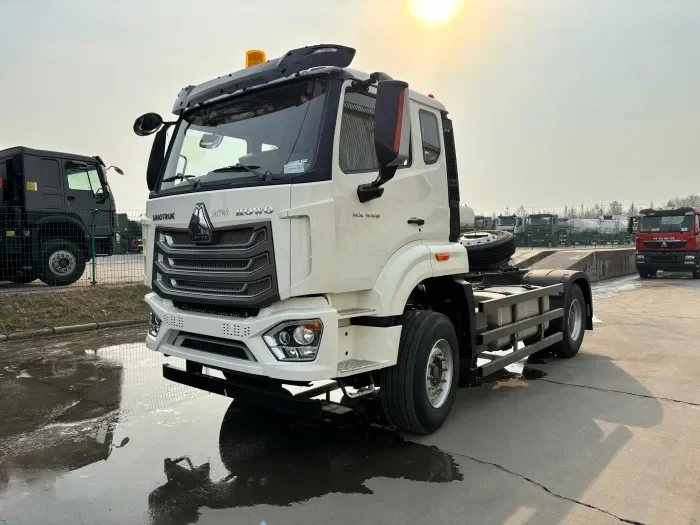
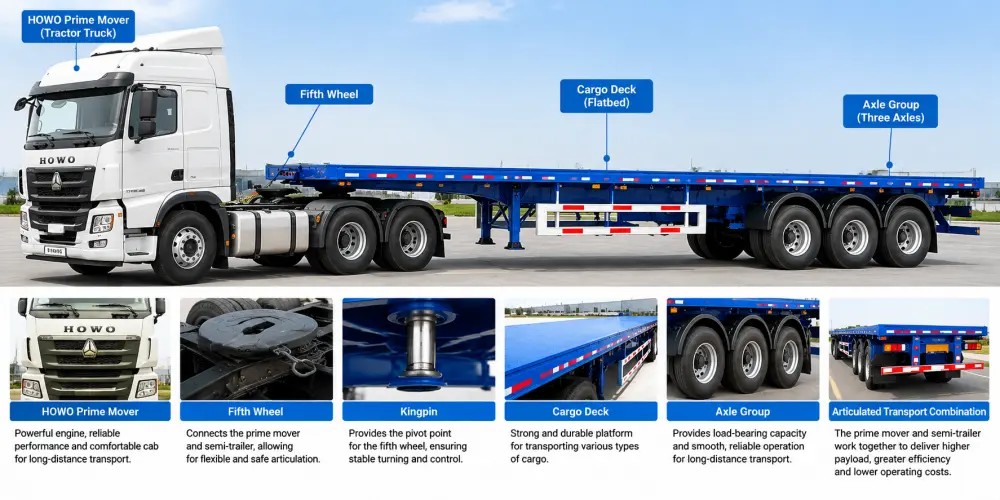
Prime mover compatibility is a mandatory part of semi trailer selection. The tractor and trailer must match at the coupling, carry the intended load within their respective ratings, and use compatible braking and electrical interfaces. Engine horsepower alone cannot establish whether a tractor is suitable for a particular trailer.
Record the tractor's make, model, axle configuration, fifth wheel specification, permitted vertical coupling load, towing limits, brake connections, electrical connectors, and relevant chassis dimensions. If the trailer will be used with multiple tractor models, list each configuration and confirm compatibility rather than assuming one specification fits the whole fleet.
- Fifth wheel and kingpin: Confirm dimensional compatibility, ratings, installation requirements, and maintenance condition.
- Coupling height: Check the loaded operating position, trailer attitude, and clearance during articulation.
- Vertical coupling load: Verify the permitted load for the fifth wheel, tractor axles, trailer design, and complete vehicle combination.
- Braking system: Confirm the specified pneumatic or electronic connections and any required control interfaces.
- Electrical system: Verify lighting, signaling, and any supported monitoring or electronic braking connections.
- Turning and clearance: Check articulation, tractor-trailer interference, ground clearance, and maneuverability at operating sites.
For construction and mining work, the tractor's driveline, transmission, engine output, and traction equipment may also affect suitability for gradients, rough surfaces, and heavy starts. An inter-axle differential lock, where fitted, can improve traction in appropriate conditions, but it does not increase a trailer's rated payload or remove axle-load restrictions.
For additional information about tractor options, compare the available trailer and truck product range. Where the tractor and trailer are purchased from separate suppliers, establish compatibility responsibilities in writing before production or shipment.
Which Chassis, Axles, Suspension, and Brakes Should You Specify?
The chassis carries and distributes loads from the cargo, body, coupling, suspension, and road inputs. Its suitability depends on structural geometry, material specifications, fabrication quality, and the intended duty cycle. A strong-looking main beam or a high-strength steel description alone does not establish the performance of the complete trailer.
Main beam and chassis structure
Ask for the main beam configuration, relevant material specifications, crossmember arrangement, and design assumptions. High-tensile steel can be useful where its properties suit the application, but material grade, thickness, product form, welding procedures, and structural geometry must be considered together. Buyers should not treat a material label as proof that the finished trailer meets a particular load requirement.
Concentrated cargo such as machinery or steel coils can create different structural demands from evenly distributed palletized freight. The deck, crossmembers, main beams, suspension mounts, and axle group should be considered as an integrated load path. The selected configuration must support the actual cargo placement, not just its total mass.
Axles, suspension, and tires
Confirm the axle manufacturer and model where specified, axle configuration, suspension type, tire size and rating, wheel arrangement, and maintenance requirements. If a particular component brand is important to the buyer, include it in the approved specification and final order documents rather than relying on an informal discussion.
Mechanical and air suspension systems have different operating and maintenance characteristics depending on the application. The appropriate choice depends on road conditions, duty cycle, service capability, component availability, and the vehicle's design. Neither type should be assumed to be the best choice for every fleet.
Braking and safety equipment
The braking system must suit the complete vehicle combination and comply with the requirements applicable to the destination market. Confirm the required braking architecture, control interfaces, component specifications, and any applicable anti-lock or electronic braking provisions. Do not assume a generic configuration is approved in every country.
For an authoritative reference, consult the United Nations Economic Commission for Europe vehicle regulations portal. The specific rules that apply depend on the destination, vehicle category, approval framework, and current national requirements. The portal is a research starting point, not a substitute for confirming local registration and certification requirements.
Request a component list that separates standard equipment, optional components, and items subject to confirmation. If the supplier quotes a specific axle, tire, suspension, or brake brand, verify that the final specification preserves the agreed details.
How Should Loading Conditions and Road Routes Affect Your Decision?
Loading and unloading arrangements can determine the correct semi trailer selection more decisively than nominal tonnage. A trailer may have enough payload capacity but still be unsuitable because a forklift cannot access the cargo, a loading dock is too high, a lowbed ramp is incompatible with the machine, or a tipper cannot discharge safely at the site.
Map the cargo-handling process from the loading point to the final destination. Record loading equipment, dock height, ramp dimensions, ground bearing conditions, overhead clearance, unloading equipment, cargo restraint procedures, and available turning space. If the trailer travels between ports, warehouses, construction sites, and customer facilities, review the restrictions at each regular location.
- Forklift loading: Confirm fork access, deck height, loading direction, and obstacles created by side walls or structural members.
- Crane loading: Check lifting access, overhead clearance, cargo lifting points, and the securing arrangement after loading.
- Machinery ramps: Assess machine dimensions, ground clearance, approach and departure angles, ramp capacity, and restraint points.
- Tipper unloading: Verify overhead clearance, ground stability, discharge area, and the manufacturer's operating procedure.
- Tanker operations: Confirm medium compatibility, loading and discharge connections, facility requirements, and applicable safety procedures.
- Container handling: Check container dimensions, twist-lock positions, terminal handling equipment, and yard access.
For hydraulic equipment, confirm the system's technical specification and operating conditions. Where cylinder pressure testing is required, the inspection procedure and acceptance criteria should be defined for the actual system. A generic pressure figure or an unsupported claim of testing does not establish that the equipment is suitable for a particular application.
Road conditions also affect the specification. A long deck may improve cargo accommodation but restrict maneuverability in confined yards. A lower deck can help with machinery loading but may require a different chassis and axle arrangement. A route with steep gradients, uneven surfaces, or limited bridge capacity can impose constraints that are not visible from a product photograph.
Send cargo dimensions, site photographs, a loading sketch, or the prime mover details to discuss the main constraints before finalizing your semi trailer selection.
Contact ZW Trailer on WhatsAppWhat Export and Compliance Checks Should Buyers Complete?
Export semi trailer selection must account for the requirements of the destination jurisdiction and the planned route. Vehicle dimensions, gross mass, axle loads, braking requirements, lighting, reflective markings, inspection, certification, registration, and special transport permits can vary by country and vehicle category. Compliance in one market does not automatically establish compliance in another.
Begin by identifying the competent registration authority and the current rules for the intended vehicle category. Then check bridge limits, overhead clearance, road width, turning radius, gradients, port access, and any special restrictions on the intended route. Specialized lowbed or modular trailer operations may require route-specific oversize or overweight permits even when the trailer itself has been manufactured to an agreed specification.
Which export documents need to be discussed?
The document package depends on the transaction, shipping method, vehicle type, and destination requirements. Before production or dispatch, the buyer and supplier should agree which documents the supplier will provide and which approvals or records must be obtained by the importer or an authorized organization.
- Commercial invoice and packing list, where applicable.
- Transport documents and shipping records for the selected freight arrangement.
- Vehicle identification and technical information needed for import or registration.
- Manufacturer documents and certificates specifically required by the destination.
- Applicable inspection records, conformity documentation, and special permits.
- Product-specific safety or technical documents for specialized trailer applications.
This list is a planning checklist, not a universal legal requirement. Confirm the current mandatory documents with the relevant authorities, customs broker, inspection organization, and other competent parties. A supplier's ability to issue a commercial document should not be confused with approval by a regulator or a guarantee of local registration.
Shipping arrangements also influence the purchase decision. Trailer dimensions, preparation, loading method, freight mode, and delivery terms can affect the landed cost. Clarify the quotation basis, export clearance responsibilities, shipping costs, insurance responsibilities where applicable, and the allocation of costs under the agreed Incoterms.
For regulatory research, the UNECE vehicle regulations resource provides information on international vehicle regulatory frameworks. For braking-related requirements, buyers can also consult the applicable version of UNECE vehicle regulations and approval materials. Always verify which rules have been adopted or apply in the actual destination market before confirming the order.
How Can You Compare Purchase Price and Total Operating Cost?
The lowest factory price does not necessarily deliver the lowest operating cost. A trailer that requires frequent repairs, delays loading, cannot use planned routes, or depends on unavailable spare parts may cost more over its service life. A useful comparison evaluates configurations that perform the same transport task and meet equivalent safety, legal, and acceptance requirements.
Include the purchase price, freight, import charges, tires, brake components, suspension maintenance, hydraulic service where applicable, spare parts, workshop labor, downtime, and the effect of tare mass on usable cargo capacity. Insurance, financing, taxes, and other costs should be included when relevant to the buyer's financial model.
Before and after: a more reliable purchasing method
Price-led approach
- Choose the lowest quotation.
- Specify only a nominal payload.
- Assume the tractor will fit.
- Check regulations after arrival.
- Look for parts only after a failure.
Important compatibility and operating costs remain unresolved.
Specification-led approach
- Compare equivalent configurations.
- Verify cargo mass and dimensions.
- Check coupling, brakes, and axle loads.
- Confirm destination requirements.
- Plan maintenance and parts support.
The decision is based on suitability, compliance, and expected operating needs.
For a fleet, compare expected annual utilization, operating distance, cargo profile, maintenance assumptions, and the cost of downtime. If two trailers have different tare masses, compare usable payload only after verifying that both configurations meet the same applicable legal limits. A lighter trailer does not automatically provide a higher permitted payload.
How Do You Evaluate a Semi Trailer Manufacturer?
A manufacturer should be able to explain how the proposed trailer matches the transport task, what components are included, which specifications remain subject to confirmation, and what documentation can be provided. The quality of the technical response is an important part of semi trailer selection because it reveals whether the supplier is working from the buyer's actual requirements or offering a generic configuration.
Ask for a configuration-specific quotation rather than a price tied only to a product name. The quotation and technical proposal should identify the trailer category, principal dimensions, mass information, axle arrangement, suspension, tire specification, coupling details, braking interfaces, optional equipment, delivery scope, and agreed inspection criteria.
Supplier evaluation checklist
- Application understanding: Does the supplier ask about cargo, loading, route, tractor, and destination requirements?
- Technical clarity: Are the main specifications, components, dimensions, and mass assumptions documented?
- Configuration control: Are changes to axle count, tires, suspension, brakes, and special equipment recorded in the final order?
- Inspection arrangements: Are the inspection method, acceptance criteria, and required records defined before production?
- Documentation: Does the quotation distinguish supplier documents from approvals that must be obtained elsewhere?
- After-sales planning: Are maintenance information, parts identification, warranty terms, and service arrangements clearly described?
- Commercial terms: Are delivery conditions, payment milestones, production schedule, freight responsibilities, and scope of supply clear?
A visual inspection can identify obvious workmanship issues, but it cannot by itself prove every structural, braking, hydraulic, or regulatory requirement. Where testing is required, define the relevant procedure and acceptance criteria in advance. Do not accept unsupported claims such as universal certification, guaranteed registration, or a fixed service life without the documentation and conditions that substantiate them.
What Are the Most Common Semi Trailer Selection Mistakes?
Mistake 1: Assuming higher payload is always better
Nominal payload does not override limits on axle loads, tires, coupling capacity, tractor capability, road access, or the complete vehicle combination. The selected trailer must satisfy all relevant conditions at the same time.
Mistake 2: Choosing by appearance instead of cargo function
Trailers that look similar can have different load paths, body structures, securing arrangements, and operating restrictions. Confirm that the proposed design suits the actual cargo and handling process.
Mistake 3: Adding axles without checking the full configuration
More axles do not automatically authorize a higher legal payload. Axle ratings, tires, suspension, chassis design, brakes, tractor compatibility, and applicable law still determine suitability.
Mistake 4: Comparing quotations with different specifications
Different tires, axle brands, suspension systems, hydraulic equipment, accessories, or inspection scopes can change the real value of a quotation. Normalize the specification before comparing prices.
Mistake 5: Applying another country's mass limits
Weight and dimension limits depend on jurisdiction, vehicle category, road network, and permit conditions. Confirm the rules that apply to the actual destination and planned routes.
Mistake 6: Leaving maintenance until after delivery
Identify routine service needs, replacement parts, local workshop capability, and maintenance documentation before placing the order. This is especially important for fleets operating far from major service centers.
How Can You Finalize Your Semi Trailer Selection?
Before releasing a purchase order, make sure the cargo requirements, trailer configuration, tractor compatibility, loading process, route restrictions, destination compliance, and commercial terms have been checked together. The following sequence provides a practical final review.
- Define the transport task: Document cargo type, dimensions, weight, center of gravity, loading frequency, and unloading method.
- Choose the trailer category: Match the body and chassis design to the cargo, loading equipment, and restraint requirements.
- Verify mass and dimensions: Review tare mass, payload assumptions, axle loads, overall dimensions, and legal restrictions.
- Confirm prime mover compatibility: Check the fifth wheel, kingpin, coupling load, brakes, electrical interfaces, towing limits, and maneuvering clearance.
- Check destination rules: Confirm applicable technical requirements, documents, inspections, registration, and special permits.
- Review components: Verify chassis design, axles, suspension, tires, braking system, and application-specific equipment.
- Compare commercial offers: Check equivalent scope of supply, freight terms, inspection, warranty, delivery, and support.
- Approve the final specification: Ensure the technical and commercial documents describe the same agreed configuration.
This process makes semi trailer selection a documented procurement decision rather than a comparison based on a headline price. It also gives the buyer a clear basis for evaluating alternatives, approving specification changes, and planning the vehicle's entry into service.
Frequently Asked Questions About Semi Trailer Selection
Does a semi trailer have its own engine?
A conventional semi trailer does not have its own traction engine. It is normally pulled by a compatible tractor unit. Specialized trailers may have auxiliary systems, so the specific equipment should be checked against its technical documentation.
Can a semi trailer stand independently when uncoupled?
Most conventional semi trailers use landing legs to support the front when disconnected from the tractor. The trailer must be parked on suitable ground and supported according to the manufacturer's instructions.
Should I select a trailer by tonnage or cargo type?
Start with the cargo type, dimensions, center of gravity, and loading method to establish the suitable trailer category. Then verify payload, axle loads, tractor compatibility, dimensions, and destination regulations. Tonnage alone is insufficient.
Does a larger body always improve transport efficiency?
No. A larger body can help with bulky, low-density cargo, but dense cargo may reach the mass limit before the body is full. Dimensions, maneuverability, tare mass, and legal restrictions must also be considered.
What should an importer confirm before ordering?
Confirm the destination's current requirements, tractor interfaces, technical specification, shipping method, required documents, customs responsibilities, and local registration conditions before approving the order.
Does adding axles automatically allow heavier cargo?
No. The permitted load depends on axle and gross mass limits, component ratings, structural design, tire and suspension specifications, tractor capability, and local law.
What information is needed for a quotation?
Provide the destination country, cargo type, weight and dimensions, loading method, prime mover details, preferred trailer type, route conditions, required components, document requirements, and target delivery schedule. Cargo photographs and technical drawings can help clarify special requirements.
How can a fleet reduce maintenance downtime?
Choose components appropriate to the operating conditions, confirm replacement-part availability, obtain maintenance documentation, and establish a service plan before the trailer enters operation. The right arrangement depends on duty cycle and local workshop capability.
Get a Semi Trailer Selection Proposal from ZW Trailer
The right semi trailer selection connects cargo characteristics, chassis design, axle configuration, prime mover compatibility, loading procedures, route restrictions, and destination regulations in one practical specification. A trailer should be evaluated against the transport work it must perform—not simply by nominal payload, appearance, or initial purchase price.
Before ordering, prepare the cargo details, tractor information, destination country, and loading requirements. Ask for a configuration-specific quotation, confirm the agreed components, and establish which documents and inspections are required. This provides a stronger basis for comparing offers and managing procurement risks.
ZW Trailer welcomes inquiries from importers, distributors, fleet operators, logistics companies, and construction contractors. Contact the team to discuss the trailer type and specifications that fit your transport application.
Ready to Specify Your Next Trailer?
Share your cargo, destination, and prime mover details to start a specification-based discussion.
WhatsApp: +86 186 7877 3290