


How ZW GROUP Connects with African Transport Buyers at a Successful Exhibition in Nigeria
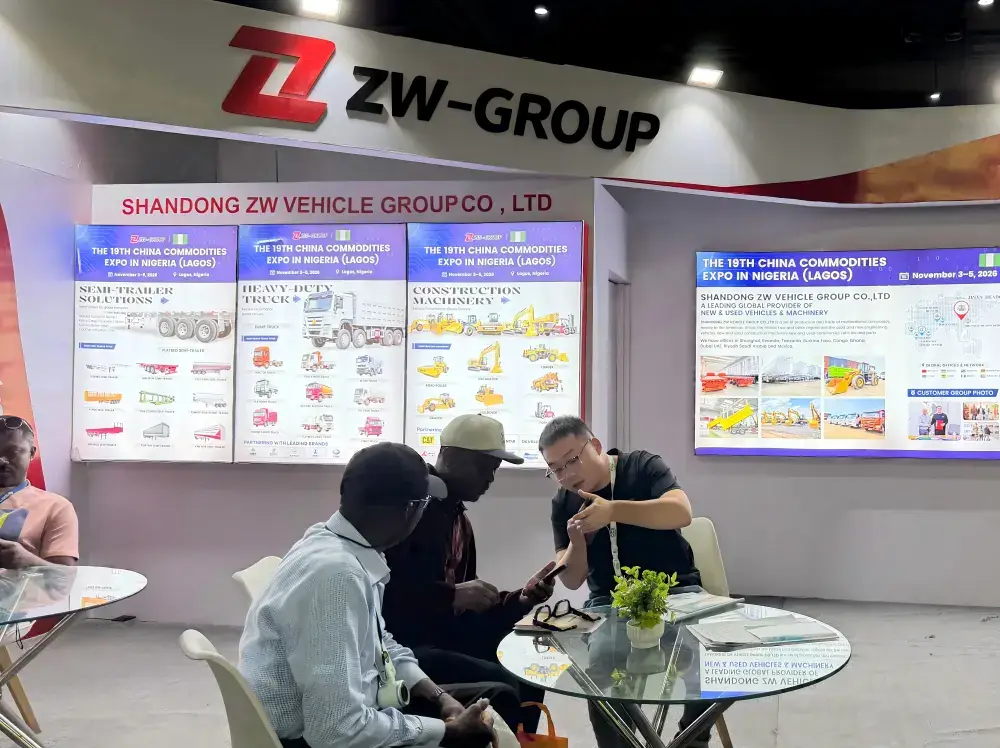
ZW GROUP has successfully concluded its exhibition in Nigeria. The event provided an opportunity to meet local transport operators, fleet owners, equipment distributors and potential business partners, exchange views on commercial vehicle requirements, and introduce our semi trailer manufacturing and export capabilities.
For buyers looking for a dependable Semi Trailer Supplier, choosing the right manufacturing partner involves more than comparing quotations. Trailer configuration, load requirements, road conditions, component selection, after-sales support and long-term operating costs all affect purchasing decisions. Through direct discussions with visitors, ZW GROUP gained a clearer understanding of these practical concerns and the equipment requirements of the Nigerian and wider African markets.
Why Was the Nigeria Exhibition Important for ZW GROUP?
Nigeria is one of the major commercial and industrial markets in West Africa. Its transport sector supports a wide range of activities, including construction, infrastructure development, agricultural distribution, manufacturing, mining-related logistics and domestic freight transportation. These industries depend on trucks and trailers capable of handling demanding working conditions and varied cargo requirements.
For a company involved in semi trailer manufacturing and international vehicle exports, participating in a local exhibition is an effective way to understand the market beyond online enquiries. Face-to-face communication allows buyers to explain their operating conditions, discuss technical requirements and evaluate whether a proposed trailer configuration is suitable for their business.
It also gives ZW GROUP the opportunity to communicate directly with customers who may be considering their first trailer purchase, expanding an existing fleet or looking for a new supply channel. Each of these buyers has different priorities. A logistics company may focus on payload, operating efficiency and fleet standardisation, while a construction contractor may place greater importance on structural strength, ground clearance and suitability for heavy equipment transportation.
These discussions are valuable because trailer specifications should be based on the actual application rather than a standard configuration selected without understanding the customer's operation.
For ZW GROUP, the exhibition was not simply a product presentation. It was also an opportunity to strengthen communication with the local market, identify potential cooperation opportunities and better understand the expectations of African commercial vehicle buyers.
What Did Visitors Want to Know About Semi Trailer Purchasing?
During discussions with prospective buyers, the most useful conversations were often centred on practical operating requirements. Customers purchasing trailers for commercial use need equipment that matches their cargo, tractor head, routes and maintenance capabilities. A trailer that looks suitable in a product catalogue may not be the right choice if its dimensions, axle arrangement or suspension system do not match the customer's actual operation.
1. Payload and Cargo Requirements
Payload is one of the first factors buyers should consider. Different cargo types require different deck structures, body designs and load-distribution arrangements. A flatbed trailer used for general cargo, a lowbed trailer transporting construction machinery and a dump trailer carrying bulk materials cannot be evaluated using the same specification criteria.
Buyers should clarify the typical cargo weight, dimensions, loading method and distribution of the load. These details help determine the appropriate trailer structure, axle configuration, suspension and braking system. They also help the supplier assess whether a standard design is suitable or whether a customised configuration should be considered.
2. Road Conditions and Operating Environment
Operating conditions have a direct influence on trailer selection. Vehicles working mainly on paved highways may have different requirements from those regularly entering construction sites, industrial yards, rural roads or mining-related areas.
Road surface, gradients, turning space, weather exposure and loading conditions should all be considered during the specification process. For example, a trailer frequently operating on uneven access roads may require particular attention to suspension selection, tyre specification, chassis strength and ground clearance.
A professional Semi Trailer Supplier should ask about these operating conditions before recommending a configuration. The objective is to supply a trailer that can perform its intended task safely and consistently, rather than simply offering the lowest initial purchase price.
3. Compatibility with the Tractor Head
Trailer and tractor compatibility is another important purchasing consideration. Buyers should confirm the tractor head's fifth-wheel height, coupling arrangement, permitted gross combination weight, electrical connections and braking system compatibility.
For fleets operating different tractor head models, these details become especially important. Incorrect coupling height or unsuitable load distribution can affect vehicle stability, tyre wear and overall operating performance. Before production, buyers should provide the relevant tractor head information so that the supplier can check the proposed configuration.
4. Maintenance and Replacement Parts
For commercial fleets, maintenance costs can have a significant effect on profitability. Buyers therefore need to consider the availability of commonly replaced components, including brake parts, suspension components, tyres, lighting equipment, wheel-end components and electrical fittings.
Component selection should take local maintenance conditions into account. A practical trailer specification should balance performance, durability, serviceability and the customer's budget. Buyers should also confirm which components are included in the quotation and whether recommended spare parts can be supplied with the trailer.
Which Semi Trailer Types Are Relevant to the Nigerian Market?
Nigeria's transport and industrial sectors cover a broad range of applications. There is no single trailer type suitable for every operation. The right choice depends on the cargo, loading process, route conditions and business model. As a manufacturer and exporter, ZW GROUP works with buyers to identify suitable trailer configurations for different transportation tasks.
Flatbed Semi Trailer for General Cargo Transportation
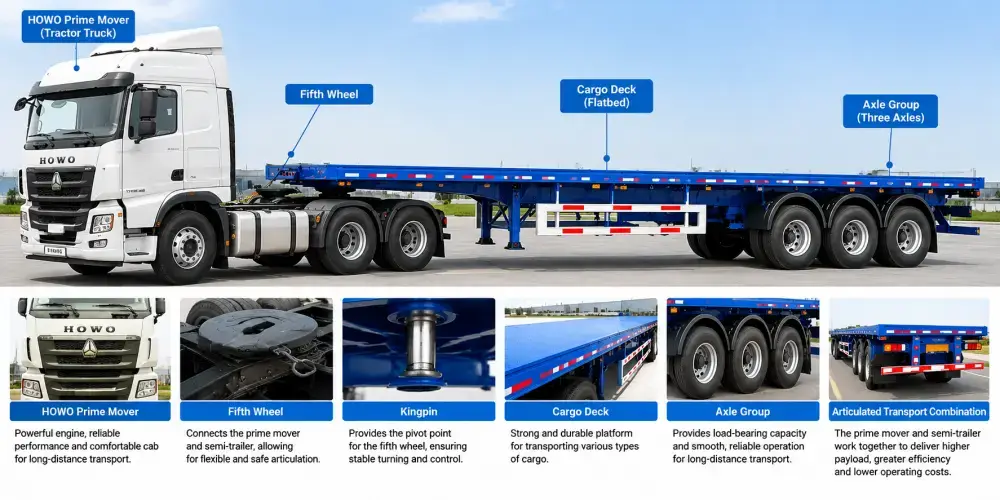
A flatbed semi trailer is commonly used to transport cargo that can be loaded from the side, rear or top. Typical applications include steel products, building materials, timber, palletised goods, machinery and other industrial cargo.
Its open deck structure offers flexibility for different cargo dimensions and loading methods. Depending on the intended application, buyers can evaluate deck length, deck width, floor material, axle arrangement, suspension type, tyre specification and lashing points.
For fleet operators, the main purchasing consideration is whether the deck dimensions and rated capacity match their regular cargo. If the trailer will carry long or irregularly shaped materials, the loading and securing arrangement should be considered before ordering.
Dump Semi Trailer for Bulk Material Transportation
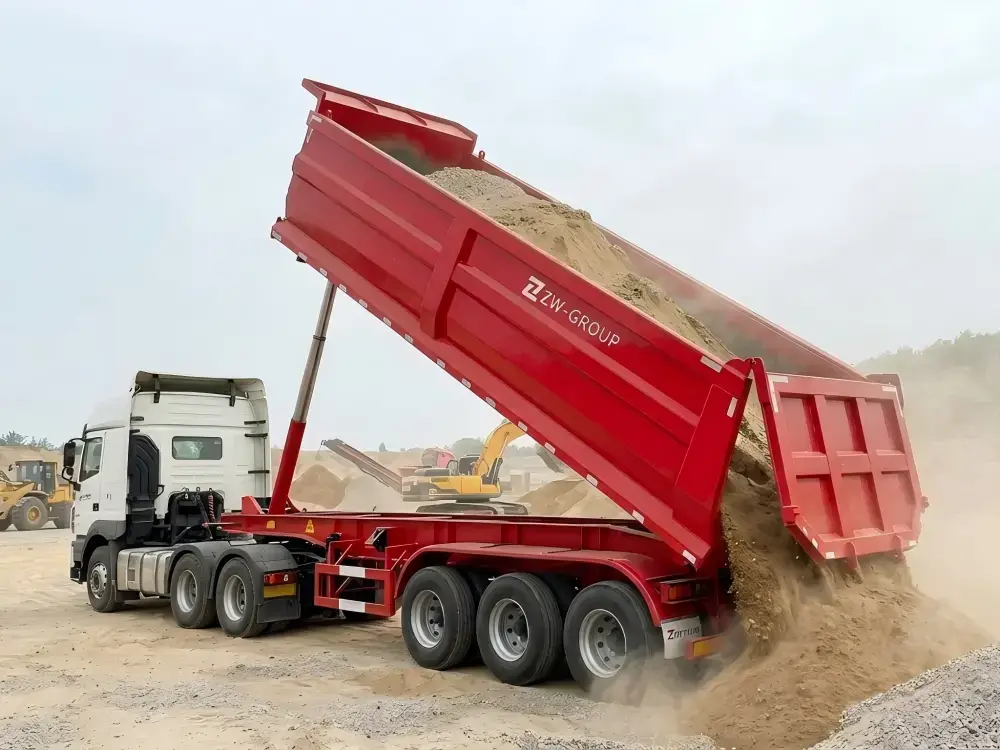
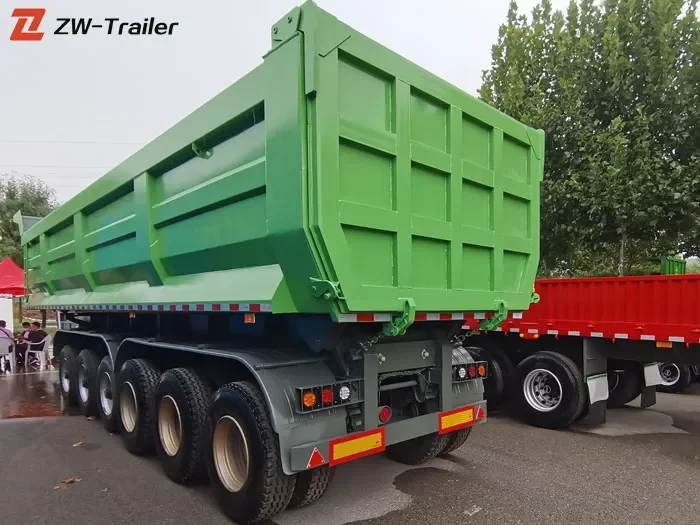
Dump semi trailers are used to transport bulk materials such as sand, gravel, crushed stone, soil and other construction materials. They are particularly relevant to businesses involved in road construction, infrastructure projects, building materials distribution and related activities.
When selecting a dump semi trailer, buyers should evaluate the body volume, body material, floor and side-wall construction, hydraulic lifting system, axle configuration and unloading requirements. The type of material being transported is important because different materials have different densities and loading characteristics.
Hydraulic system selection also deserves attention. Buyers should confirm the lifting arrangement, hydraulic cylinder configuration, operating pressure requirements and compatibility with the tractor head's hydraulic system. The unloading site and ground conditions should be considered as part of the overall operating assessment.
A suitable dump trailer should be specified according to the intended cargo and working environment. Selecting body volume without considering material density and legal weight limits can lead to inefficient or unsuitable operation.
Lowbed Semi Trailer for Heavy Equipment Transportation
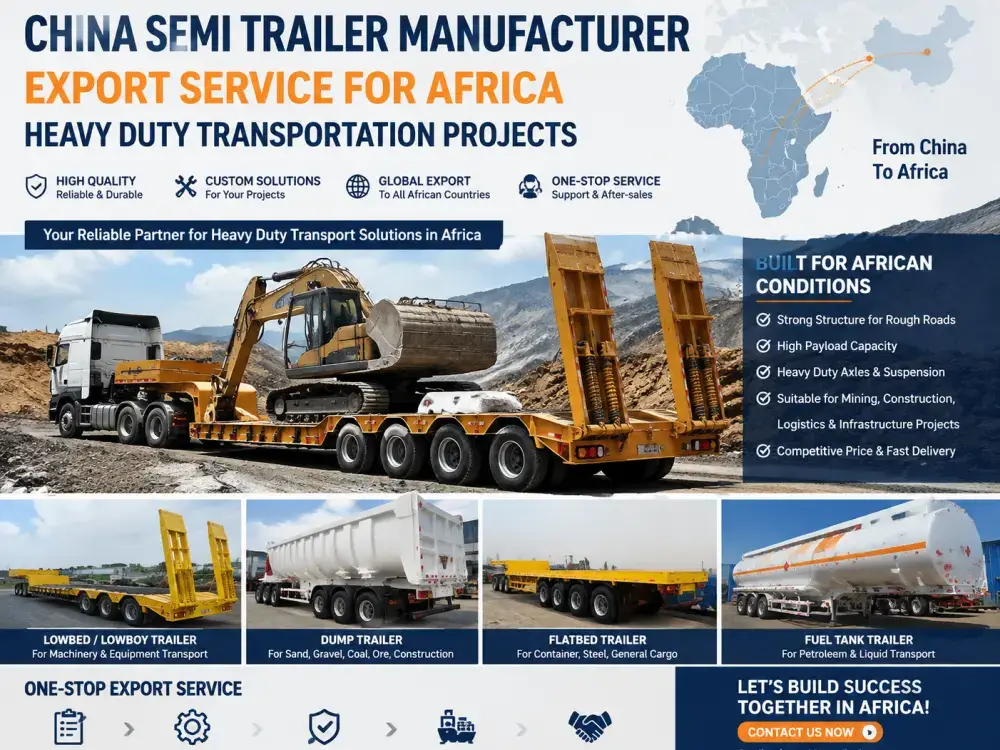
Lowbed semi trailers are designed to transport heavy and oversized equipment, including excavators, bulldozers, loaders, road construction machinery and other industrial equipment. Their low loading platform helps reduce the overall transport height of the combination, subject to the selected design and applicable regulations.
Buyers should provide the machinery's operating weight, transport dimensions, track or wheel arrangement and loading requirements. These details help determine the required deck length, platform width, loading height, axle capacity and ramp configuration.
For heavy-duty applications, the main beam structure, crossmembers, suspension, axle group and braking system deserve particular attention. Depending on the load and transport conditions, buyers may consider multi-axle configurations, detachable gooseneck designs or other specialised arrangements.
Before ordering, the buyer should also confirm the tractor head's pulling capacity, coupling compatibility and the legal requirements governing heavy and oversized transportation in the destination market.
Container Chassis Semi Trailer for Port and Container Logistics
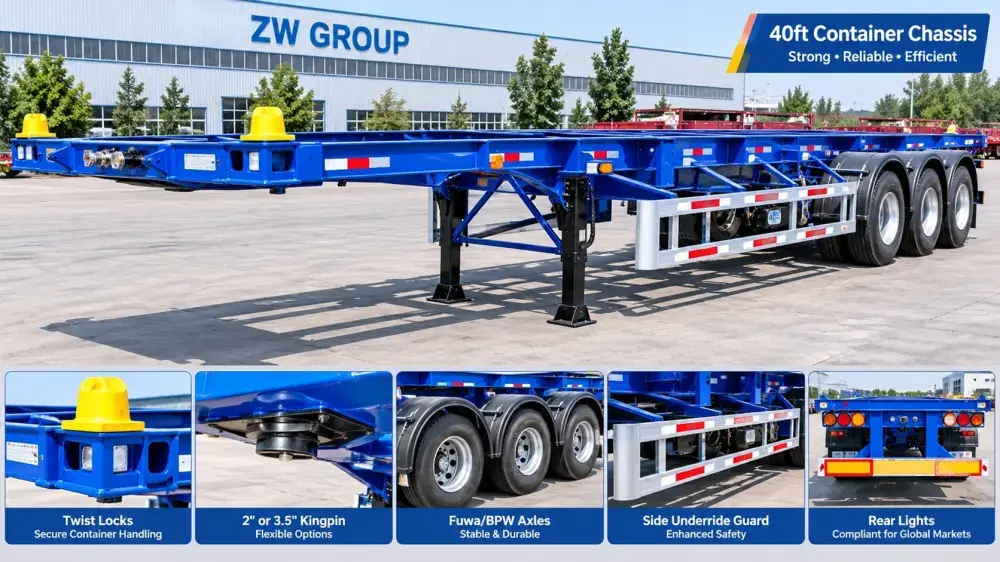
A container chassis semi trailer is designed to transport shipping containers between ports, terminals, warehouses, factories and distribution centres. Its open-frame structure is equipped with container locking points, commonly known as twist locks, to secure compatible containers during transportation.
When purchasing a container chassis, buyers should confirm the container sizes to be carried, chassis length, twist-lock positions, axle arrangement, suspension and braking configuration. The expected operating routes and tractor head specifications should also be checked.
For logistics companies handling regular container movements, fleet compatibility and maintenance planning are important. A consistent chassis specification can simplify driver familiarisation, spare-parts management and routine maintenance across the fleet.
Side Wall Semi Trailer for Packaged and General Cargo
Side wall semi trailers are used for cargo that benefits from a deck with removable or fixed side structures. Typical applications include bagged products, agricultural goods, packaged materials, industrial supplies and other general cargo.
The side-wall height, post arrangement, floor construction, loading access and cargo-securing provisions should be selected according to the products being transported. Buyers should also consider whether the trailer will be loaded by forklift, crane or manual handling equipment.
For businesses transporting different cargo types, a suitable side wall configuration can provide useful flexibility. However, the trailer should still be specified around the fleet's regular cargo and loading procedures.
Why Does Choosing the Right Semi Trailer Supplier Matter?
A semi trailer is a long-term operating asset. Its performance affects fleet utilisation, maintenance planning, transportation efficiency and the cost of moving each load. Choosing a supplier should therefore involve a review of manufacturing capability, technical communication, product configuration, quality control and export experience.
For overseas buyers, the distance between the manufacturing facility and the operating market makes accurate communication particularly important. Specifications need to be clearly confirmed before production, and the supplier should be able to explain the technical details in a way that the buyer can understand.
Manufacturing Capability and Production Control
Buyers should understand whether the supplier has the production capability to manufacture the required trailer type and configuration. Relevant considerations include chassis fabrication, welding processes, component installation, surface treatment, assembly and final inspection.
For structural components, buyers may request information about the main beam design, material selection, crossmember arrangement and fabrication process. These details help them evaluate whether the trailer structure is appropriate for the intended load and operating conditions.
It is also useful to understand how the manufacturer manages production schedules, component sourcing and inspection procedures. A clearly defined production process can reduce misunderstandings and help buyers coordinate their procurement plans.
Component Selection and Specification Transparency
Trailer performance depends on the complete configuration rather than one component alone. Axles, suspension, braking equipment, tyres, landing gear, kingpin, electrical system and hydraulic components all contribute to the trailer's operation.
Buyers should request a detailed specification sheet and confirm the brand, model, quantity and technical requirements of key components. Where a particular component brand is required, it should be written into the agreed technical specification rather than left as a general verbal understanding.
For example, axle and suspension selection should correspond to the intended load and operating conditions. The braking system should be compatible with the tractor head and relevant market requirements. Electrical connections and lighting arrangements should also be checked before production.
Quality Inspection Before Shipment
Pre-delivery inspection is an important part of international trailer procurement. Before shipment, buyers should confirm that the finished trailer matches the approved drawings and technical specifications.
Depending on the trailer type, inspection points may include overall dimensions, welding appearance, structural components, axle installation, suspension assembly, braking equipment, tyres, lighting, hydraulic operation and accessories. For a dump semi trailer, the lifting system and body movement should receive particular attention. For a container chassis, buyers should check the frame dimensions and twist-lock positions.
Inspection arrangements should be agreed with the supplier in advance. Buyers may request production photographs, inspection records or a pre-shipment inspection where appropriate. Clear inspection requirements help both parties understand the acceptance criteria.
Export Experience and Shipping Coordination
Exporting semi trailers involves more than manufacturing the equipment. International orders also require coordination of technical documents, shipping arrangements, customs information and delivery schedules.
Buyers should discuss the intended destination port, shipping method, required export documents and any market-specific compliance requirements before placing an order. The supplier should clarify which documents can be provided and which requirements must be confirmed by the buyer or local authorities.
For Nigerian buyers, import procedures and applicable vehicle requirements should be checked with the relevant local authorities and customs professionals. Requirements can vary according to product category, vehicle configuration and current regulations. Buyers should not assume that a specification or document accepted in one market will automatically satisfy another market's requirements.
Communication and After-Sales Support
Good communication is essential throughout the purchasing process. Buyers should be able to discuss technical questions, confirm production details and receive clear responses when issues arise.
Before ordering, it is worth asking how the supplier handles spare-parts enquiries, technical documentation, warranty terms and after-sales communication. The specific scope of support should be confirmed in writing so that both parties have the same expectations.
For fleet operators, access to technical information and commonly used replacement parts can help reduce maintenance delays. A reliable supplier should be willing to discuss these practical requirements rather than focusing only on the initial transaction.
How Does ZW GROUP Approach Semi Trailer Manufacturing and Export?
ZW GROUP focuses on commercial vehicle and semi trailer supply for international customers. Our business covers different trailer categories and heavy truck solutions, serving buyers with varied transportation and industrial requirements.
We understand that overseas customers do not all operate under the same conditions. A fleet owner transporting construction materials in Nigeria may have different requirements from a logistics operator moving containers or a contractor transporting heavy machinery. For this reason, product selection and configuration should begin with an understanding of the customer's actual application.
Application-Based Configuration
ZW GROUP can discuss trailer configurations according to cargo type, load requirements, tractor head information and operating conditions. Depending on the project, the discussion may cover trailer dimensions, axle arrangement, suspension, braking system, tyres, landing gear, body structure and other components.
Where a buyer has a specific technical requirement, drawings, photographs or an existing trailer specification can help clarify the proposed design. This information is particularly useful when replacing an existing fleet model or matching trailers to tractor heads already in operation.
Clear Technical Communication
Before an order enters production, the technical specification should be reviewed and confirmed by both parties. Important details include overall dimensions, payload requirements, axle configuration, component brands, optional equipment, painting requirements and delivery arrangements.
This step helps reduce the risk of specification misunderstandings. It also gives the buyer a clear reference for production follow-up and pre-shipment inspection.
Support for Different Export Markets
International buyers may have different expectations concerning trailer dimensions, electrical systems, braking arrangements, documentation and local operating conditions. ZW GROUP discusses these requirements during the quotation and configuration process so that the proposed equipment can be evaluated against the intended market.
Customers should provide their destination country and any known local technical requirements at the enquiry stage. This allows the configuration discussion to address market-specific considerations before production begins.
Solutions for Fleet Expansion and Replacement
Some customers are purchasing trailers to establish a new transportation business, while others need additional units for an expanding fleet. There are also buyers replacing older equipment or looking for an alternative supplier.
These projects may require different purchasing strategies. A new fleet operator may need guidance on selecting a suitable trailer type, while an established transport company may already have standardised specifications and require consistent configurations across multiple units.
By understanding the buyer's fleet structure and business objectives, ZW GROUP can discuss a more relevant product proposal rather than relying on a generic quotation.
What Should Nigerian Buyers Prepare Before Requesting a Quotation?
A detailed enquiry helps a Semi Trailer Supplier prepare a more accurate quotation and reduces unnecessary communication during the specification process. Buyers do not need to prepare a complicated technical document for an initial enquiry, but several basic details can make the discussion much more efficient.
- Trailer type: Specify whether you need a lowbed, dump, flatbed, container chassis, side wall or another trailer type.
- Intended cargo: Describe the goods or equipment to be transported, including typical dimensions and weight.
- Required capacity: Provide the expected payload or body volume, where applicable.
- Tractor head information: Share the tractor head brand, model, axle configuration and relevant coupling details.
- Operating conditions: Explain whether the trailer will mainly operate on highways, construction sites, industrial roads or mixed routes.
- Quantity: Indicate the number of units required and whether the order is for immediate purchase or future fleet planning.
- Destination: Confirm the destination country and preferred delivery port, if known.
- Special requirements: Mention preferred component brands, dimensions, paint colour, accessories or local compliance requirements.
If you have photographs of your current trailer, cargo or tractor head, sharing them can help the supplier understand the application. Existing technical drawings or specification sheets are also useful when you need a replacement trailer with similar dimensions.
For buyers who are still comparing different trailer types, a description of the transportation task is a good starting point. The supplier can then discuss which configurations are worth evaluating.
Planning to Purchase Semi Trailers in Nigeria?
Send ZW GROUP your trailer type, cargo information, required quantity and tractor head details. Our team can review your requirements and discuss a suitable configuration for your transportation operation.
WhatsApp: +86 186 7877 3290
Visit ZW GROUP to explore our semi trailer solutions.
How Can Buyers Compare Semi Trailer Quotations More Effectively?
When comparing quotations from different manufacturers, buyers should avoid making decisions based on price alone. Two trailers described using the same product name may have different structural designs, component specifications and operating capabilities.
A meaningful comparison starts with a consistent technical scope. Buyers should check whether the quotations refer to the same overall dimensions, payload, axle configuration, suspension type, braking system, tyre specification and main structural components.
Compare the Main Structure
For trailers designed to carry heavy loads, the main beam and supporting structure are important evaluation points. Buyers should review the proposed design, material specifications and structural arrangement. A lower quotation may reflect a different configuration, so the technical details should be checked before comparing prices.
Check Axles, Suspension and Brakes
Axles, suspension and braking components influence load distribution, vehicle control and maintenance requirements. Buyers should confirm the exact specifications rather than relying on broad descriptions such as heavy-duty axle or standard braking system.
For example, the quotation should identify the axle quantity and rated capacity, suspension arrangement and braking configuration. If ABS or a particular braking component is required, this should be clearly stated in the technical agreement.
Review Included Equipment
Landing gear, spare wheel carriers, toolboxes, mudguards, electrical connections, lighting, hydraulic components and other accessories can affect the final quotation. Buyers should compare the included equipment line by line to avoid unexpected costs after placing an order.
Confirm Delivery and Commercial Terms
Price comparisons should also consider production lead time, payment terms, shipping arrangements, warranty conditions and the scope of after-sales support. Buyers should confirm whether the quotation includes transportation to the port, export-related costs or other charges.
For international orders, the quotation should clearly state the applicable trade term and the responsibilities of each party. Any special inspection, documentation or packaging requirements should also be discussed before the order is confirmed.
What Does the Nigeria Exhibition Mean for Future Cooperation?
The successful conclusion of the exhibition marks another opportunity for ZW GROUP to strengthen its communication with the African commercial vehicle market. Conversations with visitors helped us exchange practical information about trailer applications, fleet requirements and purchasing priorities.
For buyers, direct communication with a supplier can help clarify product configurations and identify the information needed before making a purchasing decision. For manufacturers and exporters, these discussions provide useful feedback about local operating conditions and customer expectations.
However, a successful business relationship is built through more than an exhibition meeting. It requires clear technical communication, transparent commercial terms, consistent product specifications and reliable follow-up throughout the purchasing process.
ZW GROUP welcomes further enquiries from Nigerian transport companies, construction contractors, logistics operators, equipment distributors and other commercial vehicle buyers. Whether you are purchasing one trailer for a specific project or evaluating a larger fleet order, we are ready to discuss your requirements.
Our team can help review the intended application, discuss suitable trailer types and prepare a product proposal based on the information provided. Buyers with existing specifications are welcome to share them for evaluation.
Looking for a Semi Trailer Supplier for Your Next Fleet Purchase?
ZW GROUP welcomes enquiries from Nigerian and other African buyers. Contact us with your required trailer type, operating conditions and purchasing plan. We will discuss the technical configuration and quotation details with you.
WhatsApp: +86 186 7877 3290
Website: www.zw-trailer.com
More vehicle solutions: www.zwgroup-vehicle.com
Frequently Asked Questions About Choosing a Semi Trailer Supplier
1. What types of semi trailers can ZW GROUP supply?
ZW GROUP supplies different semi trailer categories for commercial transportation and industrial applications. Depending on the project, buyers can enquire about flatbed semi trailers, dump semi trailers, lowbed semi trailers, container chassis trailers, side wall semi trailers and other configurations. The final product selection should be based on cargo type, load requirements and operating conditions.
2. Can I request a customised semi trailer configuration?
Buyers can discuss their required dimensions, axle arrangement, suspension, braking system, body structure, component preferences and accessories. Providing a detailed specification, drawing or reference photograph helps the supplier evaluate the requirements. Any customised configuration should be reviewed and confirmed before production.
3. How do I choose the right trailer for my tractor head?
Start by providing the tractor head brand, model, axle configuration, fifth-wheel height and relevant technical information. The trailer's coupling arrangement, load distribution and braking connections should be checked against the tractor head. Buyers should also confirm the permitted combination weight and applicable local requirements.
4. Which semi trailer is suitable for construction material transportation?
The answer depends on the material and loading method. Dump semi trailers are commonly considered for bulk materials such as sand and gravel, while flatbed or side wall semi trailers may be more suitable for packaged building materials, steel products or other general cargo. Cargo weight, volume and unloading conditions should guide the final selection.
5. What information should I provide to get a quotation?
At a minimum, provide the trailer type, required quantity, cargo or application, expected payload, destination country and any known tractor head information. If you have preferred dimensions, component brands or technical drawings, include them in the enquiry. More detailed information generally helps the supplier prepare a more accurate proposal.
6. Can ZW GROUP supply trailers for Nigerian customers?
ZW GROUP welcomes enquiries from Nigerian buyers and other international markets. Customers can contact our team to discuss product availability, configuration, quotation, export arrangements and destination requirements. Import regulations and local compliance obligations should be confirmed with the relevant authorities before ordering.
7. What should I check before confirming a semi trailer order?
Review the approved technical specification, overall dimensions, rated capacity, axle and suspension configuration, braking system, tyres, accessories, paint requirements, delivery schedule, payment terms and warranty conditions. Make sure that all agreed details are included in the order documents before production begins.
8. How can I contact ZW GROUP for a semi trailer enquiry?
You can contact ZW GROUP through WhatsApp at +86 186 7877 3290 or visit www.zw-trailer.com. To help us understand your requirements, please include the trailer type, quantity, destination and intended application in your message.