


ZW GROUP | CONTAINER TRANSPORT SOLUTION
products
Featured products
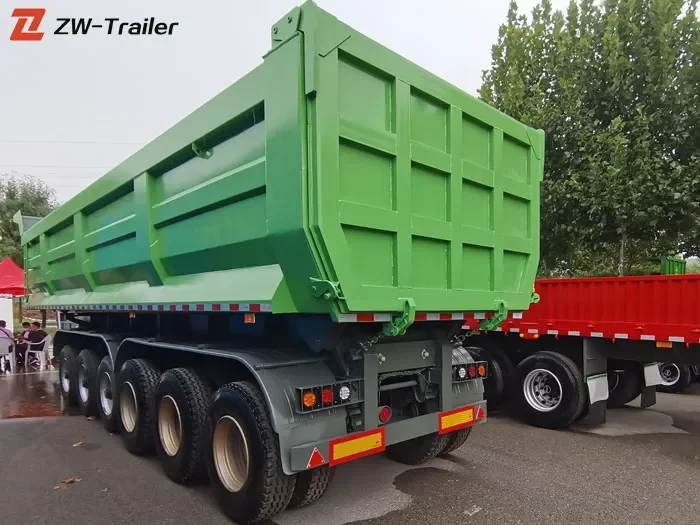
6 Axles Dump Tipper Semi Trailer
More
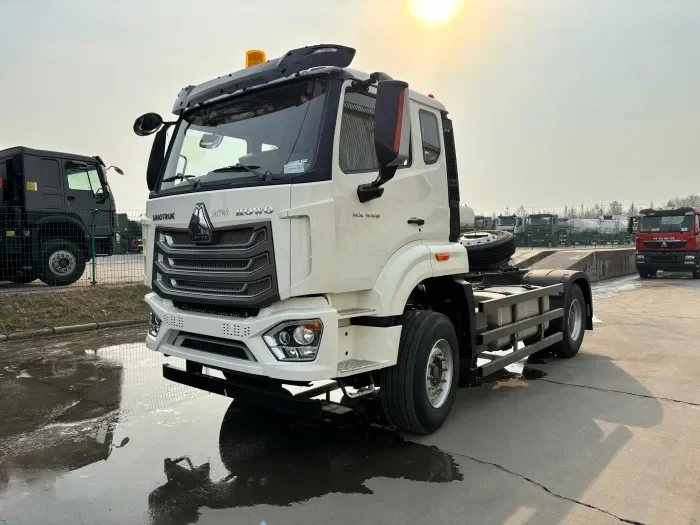
Howo NX 440 4*2 Trailer Tractor Truck Head
More
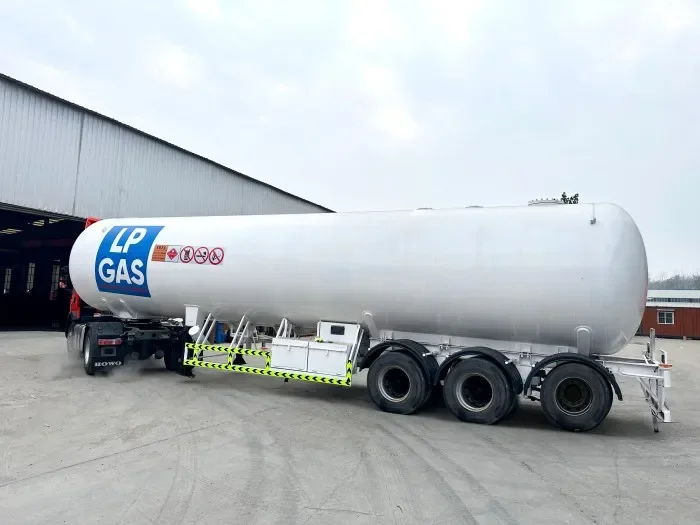
LPG Tank Truck Semi Trailer
More
Contact us
Address
Shizhong District,Jinan City,Shandong Province
info@zwgroup-vehicle.com
Phone
+86-18678773290
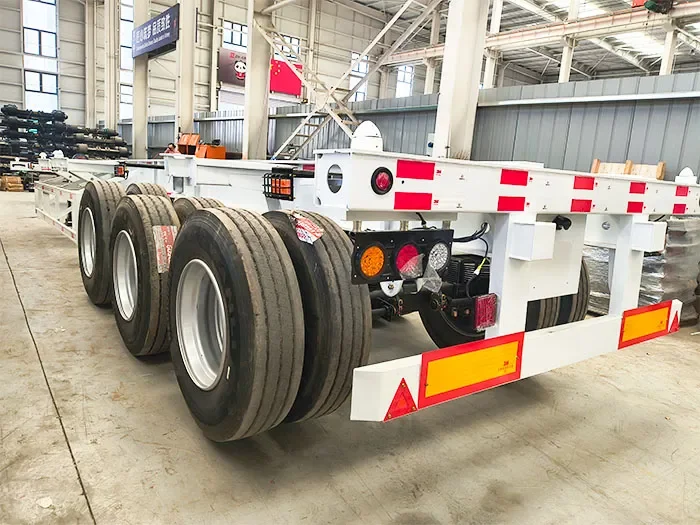
Heavy Duty Container Transport Trailer
Brand
ZW GROUP
Product origin
Shandong
Delivery time
Supply capacity
Buy a Heavy Duty Container Transport Trailer from ZW GROUP for 20ft and 40ft ISO container hauling. Explore Q345B steel, 3-axle configurations, ISO Twist Locks, air or mechanical suspension, export customization, and bulk-order support.
Email
Heavy Duty Container Transport Trailer for 20ft and 40ft ISO Containers
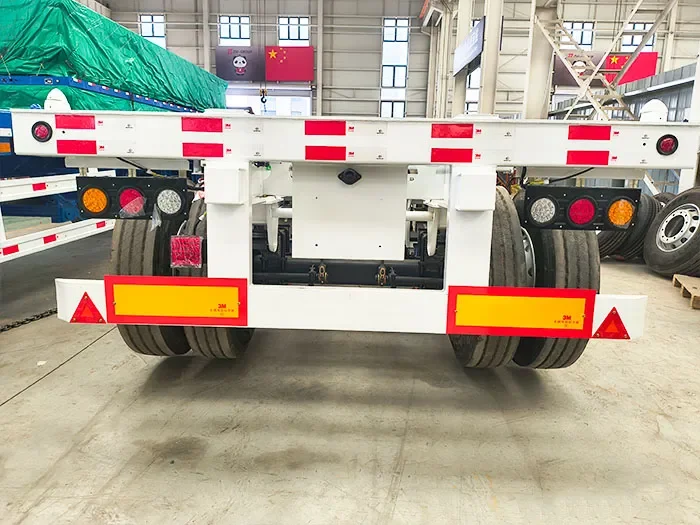
The Heavy Duty Container Transport Trailer from ZW GROUP is engineered for demanding container hauling work between ports, terminals, warehouses, distribution yards, and inland logistics routes. The platform is designed around 20ft and 40ft ISO container handling, heavy payload requirements, structural durability, and practical overseas maintenance.
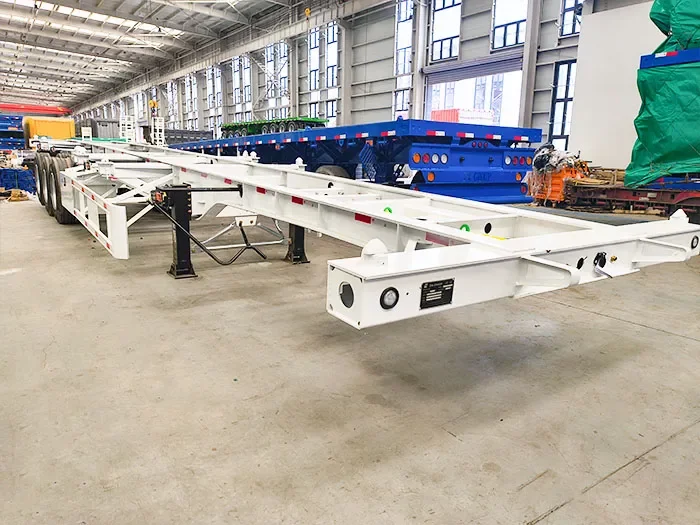
A container trailer does more than carry a box. The chassis transfers concentrated container loads through the corner castings, twist locks, cross members, main beams, suspension, axles, wheels, and kingpin into the prime mover. A weak component can affect the entire transport cycle. That is why this Heavy Duty Container Transport Trailer focuses on load distribution, beam strength, lock positioning, suspension stability, corrosion protection, and serviceability.
Request a Trailer Quote

What Is a Heavy Duty Container Transport Trailer?
A Heavy Duty Container Transport Trailer is a purpose-built semi-trailer chassis for moving ISO containers by road. Unlike a conventional flatbed, it uses dedicated container locating points and ISO Twist Locks to secure the container at its corner castings. This arrangement allows a prime mover to collect, haul, and deliver containers without treating the cargo as conventional breakbulk freight.
ZW GROUP developed this Heavy Duty Container Transport Trailer around common 20ft and 40ft ISO container requirements. The supplied configuration uses a three-axle load-bearing system, high-strength Q345B steel for the main beam structure, and standard ISO Twist Locks. The design is intended for port transportation, international logistics, and frequent road container transfer.
The basic operating principle is straightforward. The container sits on defined support areas. Its corner castings engage with the twist locks. The chassis carries the vertical load through the cross members and main beams. The suspension transfers dynamic road forces toward the axles. The kingpin connects the trailer to the fifth wheel of the prime mover. Braking and lighting systems then support normal road operation.
For fleet operators, the value comes from keeping this load path stable under repeated use. Container hauling can involve port roads, highways, industrial access roads, warehouse yards, and rough secondary routes. A suitable Heavy Duty Container Transport Trailer therefore needs more than an attractive appearance. It needs a structure that matches the actual route, payload, axle limitations, and operating frequency.
Why Does the Main Beam Matter on a Heavy Duty Container Transport Trailer?
The main beam is one of the most important structural components of a Heavy Duty Container Transport Trailer. Container loads create concentrated forces around the supporting areas rather than distributing weight evenly across the complete deck. Repeated loading and unloading can also create fatigue cycles in the chassis.
ZW GROUP uses Q345B high-strength low-alloy structural steel for the main beam. Compared with ordinary carbon steel structures, Q345B provides higher yield strength and is intended to handle concentrated container loading more effectively. The supplied design uses continuous structural welding, with key welding areas produced through automated welding and then subject to manual inspection.
Q345B high-strength structural steel for the main beams.
Continuous load-bearing structural arrangement.
Automated welding in key structural areas.
Manual re-inspection of critical welding areas.
Structural reinforcement available according to route requirements.
Design attention to long-term fatigue and deformation risks.
This matters when the trailer works at high utilization. A fleet vehicle may make repeated port-to-warehouse trips every week. The chassis experiences acceleration, braking, cornering, road vibration, and uneven pavement. These forces do not disappear after the container leaves the factory. The structure must continue to perform after thousands of operating cycles.
Engineering focus: The purpose of the reinforced beam structure is to reduce long-term deformation and fatigue-related structural risk. The correct steel grade, welding process, reinforcement arrangement, and load distribution should always be matched to the customer's actual operating conditions.

Why Choose a Three-Axle Heavy Duty Container Transport Trailer?
The three-axle configuration helps distribute container weight across the trailer structure and tires. For a Heavy Duty Container Transport Trailer carrying substantial container loads, axle arrangement directly affects road stability, tire loading, braking performance, and compliance with local axle-load rules.
ZW GROUP supplies three-axle configurations with heavy-duty domestic axles and can match BPW or FUWA axle options according to project requirements. The supplied specification also includes a dual-line air brake system and spring brake chambers. These systems are intended to provide the braking architecture required for heavy commercial trailer operation.
Suspension selection should not be made only by price. Air suspension can improve ride stability and reduce vibration transmitted through the trailer. This can be useful on highway routes where container cargo is transported over long distances. Mechanical suspension can be considered where route conditions, maintenance resources, and operating priorities favor a simpler mechanical arrangement.
Air Suspension
Reduced road vibration.
Improved high-speed transport stability.
Potential reduction in abnormal tire wear.
Useful for demanding highway container routes.
Mechanical Suspension
Simple mechanical construction.
Suitable for demanding road environments.
Practical option for markets prioritizing service simplicity.
Can be selected for specific African operating conditions.
The following specification represents the standard configuration described by ZW GROUP. Actual specifications can change according to axle selection, suspension, dimensions, customer requirements, and local road regulations. For a commercial quotation, buyers should confirm container type, legal payload, axle-load limits, prime mover specifications, and route conditions before production.
Get Your Container Trailer Configuration
The right Heavy Duty Container Transport Trailer starts with the right technical information. Share your route and operating requirements with ZW GROUP so the trailer structure can be matched to your actual container hauling work.
Container Type + Payload + Prime Mover + Road Conditions + Quantity = Correct Trailer Specification
Request Heavy Duty Container Transport Trailer QuoteTags: