


HOWO Forest Tractor Truck for Timber Haulage in Cameroon
For timber operators, the right tractor head must match the forest road, trailer load, coupling system and daily working conditions. The HOWO forest tractor truck recently inspected by a customer from Cameroon was selected with these practical requirements in mind. The customer had already returned to purchase another Shantui SD22F bulldozer, equipped with a Cummins NT855 engine and hydraulic winch, for demanding forestry work.
The customer's next requirement was clear: a HOWO forest tractor truck capable of supporting the transportation stage of the timber operation. The bulldozer helps recover logs, drag timber and clear working areas. The tractor head, when matched with a suitable timber trailer, transports the recovered logs toward collection yards, sawmills or other designated destinations.
This is a practical equipment combination for businesses evaluating forestry machinery and timber transport vehicles in Cameroon. The two machines perform different tasks, and the productivity of the complete operation depends on how well timber recovery, loading, trailer selection and transportation are coordinated.
For fleet owners and commercial vehicle buyers, the purchase decision should go beyond the model name. Chassis construction, suspension, tyres, overhead protection, winch configuration, fifth-wheel compatibility, braking performance and maintenance access all deserve attention before the vehicle is approved for export.
Request a HOWO Forest Tractor Truck Quotation
Tell us where the vehicle will operate, what type of timber you transport, which trailer you intend to use and what payload you require. ZW Group can discuss the relevant tractor configuration and export requirements with your purchasing team.

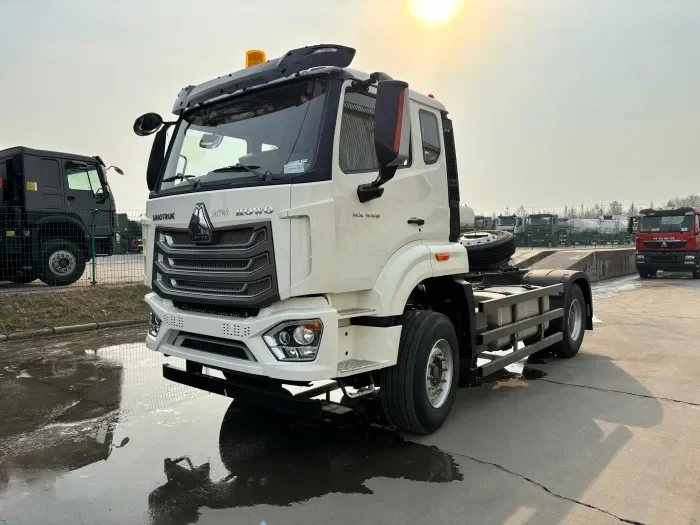
Suggested image: Full exterior view of the HOWO forest tractor truck inspected by the Cameroonian customer.
Why Choose a HOWO Forest Tractor Truck for Timber Haulage?
A forestry tractor head should be selected for its ability to work with the intended trailer and road conditions, not simply for its engine output or purchase price. Logging operations often combine uneven forest access roads, wet soil, sharp turns, branches, loading areas and longer journeys on public roads. These conditions place different demands on a vehicle from those encountered in routine highway freight transport.
The HOWO forest tractor truck inspected by the customer features a reinforced chassis, strengthened suspension, wider tyres, additional protection beneath the cab, a reinforced roof guard and a hydraulic winch. These are the key configuration details described during the vehicle visit. Buyers should confirm the exact equipment installed on the unit they intend to purchase because specifications can vary between configurations.
Chassis reinforcement helps address structural demands, while suitable suspension and tyres support the vehicle's intended operating conditions. Underbody protection can help reduce exposure of selected components to road debris, provided the protection is correctly designed and does not interfere with maintenance. A roof guard offers an additional barrier against certain overhead hazards in areas with dense vegetation.
These features should be evaluated as part of the complete vehicle rather than as independent selling points. A truck with forestry-oriented equipment still needs an appropriate drivetrain, adequate traction, compatible trailer brakes, correctly rated coupling equipment and compliance with the relevant vehicle-weight and dimension limits.
\\\\\\\\\\\\\\\\\\\\Exact ratings and available equipment must be confirmed against the technical specification of the vehicle being quoted.
How Does the HOWO Forest Tractor Truck Fit into a Timber Transport Operation?
The most effective equipment plan separates timber recovery, loading and transportation while ensuring that each stage has sufficient capacity. The Cameroonian customer's repeat purchase of the Shantui SD22F and subsequent interest in a HOWO forest tractor truck illustrate this division of work.
The SD22F bulldozer, equipped with a Cummins NT855 engine and hydraulic winch, supports demanding tasks inside the forest. Depending on the site and operating method, these tasks can include dragging logs, helping recover timber and clearing access. The tractor head performs a different role: transporting timber on a compatible trailer along the designated route.
A bulldozer is not a substitute for a road-going timber transport combination, and a tractor head is not a substitute for machinery designed for forest recovery. Treating these roles separately helps procurement teams identify equipment requirements, trailer needs and potential bottlenecks before committing capital.
01. Timber Recovery
The SD22F supports designated forest recovery and clearing work. Winch operations require rated equipment, suitable rigging, secure anchor points and controlled working zones.
02. Loading and Restraint
Logs are positioned and secured using appropriate handling equipment and trailer restraints. Timber length, mass, loading method and legal dimensions determine the suitable trailer configuration.
03. Timber Transportation
The HOWO forest tractor truck pulls the loaded trailer along the planned route. Coupling, braking, axle loads, traction and road conditions must remain within approved operating limits.
For a fleet manager, the next step is to calculate the working cycle. Consider the distance from the recovery area to the loading point, the time required to secure the logs, the loaded travel distance, unloading time and the return journey. Trailer availability and access-road conditions can influence output as much as the tractor head itself.
Do not assume that purchasing a more powerful vehicle automatically increases daily timber deliveries. If loading equipment is unavailable or the access road is impassable after heavy rain, additional tractor capacity may not solve the bottleneck. The equipment plan should reflect the actual work sequence and site limitations.

What Should Buyers Inspect on the Chassis and Suspension?
The chassis, suspension, axles and fifth-wheel mounting structure must be checked against the intended gross combination weight and operating conditions. A reinforced frame is relevant to demanding work, but reinforcement alone does not authorize higher payloads or eliminate the need for regular inspections.
The HOWO forest tractor truck examined by the customer features chassis reinforcement and strengthened suspension. For a buyer, the important question is whether the installed components and ratings match the planned timber trailer and route. Rough ground, uneven wheel loading and repeated low-speed manoeuvring can place additional demands on the running gear.
During a physical inspection, examine the frame rails, crossmembers, suspension brackets, axle housings and fifth-wheel mounting points. Look for cracks, distortion, corrosion, uneven welds and signs of previous repairs. On a used vehicle, maintenance records and previous operating history can help explain wear that may not be obvious from a quick exterior inspection.
The fifth wheel and kingpin require particular attention. The coupling must have the correct rating and geometry for the trailer. Fifth-wheel position also influences the vertical load carried by the tractor axles, so the loaded combination must be assessed rather than relying on the tractor's unloaded appearance.
- Verify chassis and axle specifications against the manufacturer's documentation.
- Confirm fifth-wheel capacity, mounting details and kingpin compatibility.
- Inspect suspension components, steering parts and tyre load ratings.
- Check gross combination weight and axle loads against applicable limits.
- Review underbody protection for damage, loose fittings and maintenance interference.
- Confirm that modifications comply with relevant vehicle approval requirements.
For operators in Cameroon, this inspection is especially useful when the vehicle must travel between remote forest access roads and public highways. The appropriate specification should balance site requirements with the vehicle's legal operating limits.
Why Is a Reinforced Roof Guard Important for Forestry Work?
A roof guard can provide additional protection against branches and vegetation, but it must not be treated as certified protection against every falling object. Forest roads may have low-hanging branches, vines and vegetation extending into the vehicle's path. Contact can damage the cab roof, lights, mirrors or other exposed components.
The HOWO forest tractor truck inspected by the Cameroonian customer includes a reinforced roof guard. During the visit, the customer paid close attention to the welding points and steel construction. His inspection focused on whether the protective structure was properly built and integrated with the vehicle.
Buyers should inspect the attachment points, weld consistency, fasteners and any visible deformation. Ask the supplier for available technical information on the guard's design and intended protection. Unless a verified rating is provided, do not assume that it can withstand the impact of a heavy tree trunk or prevent all cab damage.
Roof protection should form part of a wider safety plan. Drivers need adequate visibility, a route suitable for the vehicle, safe clearance from overhead hazards and clear procedures for approaching loading areas. No additional guard makes it safe to drive beneath unstable trees or work close to uncontrolled suspended timber.

How Should the Hydraulic Winch Be Evaluated?
Winch selection should be based on rated line pull, hydraulic flow, working pressure, mounting strength and the intended application. A general description such as heavy-duty winch does not tell a buyer whether the equipment is suitable for a specific recovery task.
The customer's Shantui SD22F is equipped with a hydraulic winch, and the HOWO forest tractor truck inspected during the later visit was also described as having a hydraulic winch. The exact installation and operating purpose should be confirmed for the individual vehicle in the quotation and specification sheet.
During inspection, the customer asked about pulling capacity, hydraulic-system compatibility and operating convenience. He also checked the hydraulic lines. These details matter because the winch, hydraulic pump, valves, hoses and fittings must work together within their rated limits.
\\\\\\\\\\\\\\\Winch line pull is not the same as trailer towing capacity. The ability to move a loaded trailer depends on the tractor's powertrain, transmission gearing, drive configuration, traction, braking system, axle ratings, coupling and terrain.
Operators must not exceed the winch's rated capacity. Pulling work requires appropriate rigging, secure anchor points and exclusion zones that keep personnel clear of loaded lines. Hydraulic pressure testing should be performed only with suitable instruments and approved procedures.

Confirm the Winch Specification Before Ordering
Send your intended pulling application, required line pull and operating conditions to our team. We can help identify which hydraulic and mounting details need to be confirmed for the proposed configuration.
How Does Cab Comfort Affect Long-Distance Timber Haulage?
A suitable cab helps drivers maintain a practical working position and manage long shifts, but comfort must be considered alongside visibility, vehicle control and fatigue management. Timber transport can involve extended driving, frequent low-speed manoeuvring and repeated transitions between rough forest access roads and paved routes.
The HOWO forest tractor truck inspected by the customer features four-point cab suspension, an adjustable seat and a cab layout designed to provide a broad field of view. The customer sat in the cab to assess its comfort. For fleet buyers, this type of physical inspection is a useful complement to reviewing the written specification.
Seat adjustment, steering position, mirror coverage, instrument visibility and control accessibility should all be checked. The driver must be able to maintain a stable driving posture and monitor the trailer and surrounding traffic. Additional roof guards or accessories should not obstruct visibility.
- Inspect cab suspension and check for excessive movement or wear.
- Test seat adjustment and steering position.
- Check mirrors, windshield, wipers and lighting.
- Confirm that dashboard warnings and instruments operate correctly.
- Inspect ventilation and air-conditioning equipment where fitted.
- Ensure that safety equipment is accessible and securely stored.
Cab comfort does not replace rest breaks, driver training or safe operating speeds. A well-maintained vehicle and sensible work schedule are important for reducing fatigue during long timber-haulage shifts.
What Timber Trailer Should Match the HOWO Forest Tractor Truck?
The tractor head and timber trailer must be assessed as one vehicle combination, with compatible coupling equipment, legal axle loads, adequate braking and suitable log restraints. A trailer that physically connects to the tractor is not automatically a safe or compliant match.
Timber loads vary in length, diameter, species and moisture content. These characteristics influence total mass, load distribution and restraint requirements. A purpose-designed timber trailer may use bolsters, stakes or other structures to support logs, depending on the loading method and local operating requirements.
Before ordering, buyers should confirm fifth-wheel capacity, kingpin compatibility, trailer axle configuration, brake connections and the relevant gross combination weight. Any ABS equipment or other required braking components must be compatible and correctly installed. The final configuration must comply with the rules applicable to the intended route.
Five Questions to Answer Before Purchase
- What timber will be transported? Record typical log lengths, diameters, piece counts and expected mass.
- What are the road conditions? Identify gradients, surface quality, turning space, drainage and public-road travel distances.
- Which trailer is required? Confirm the loading method, axle configuration, coupling height and restraint system.
- What are the legal limits? Verify gross combination weight, axle loads, vehicle dimensions and local approval requirements.
- What service support is available? Check the availability of tyres, filters, brake components, hydraulic fittings and qualified technicians.
For procurement teams, a complete cost comparison should include purchase price, freight, customs charges, routine maintenance, consumables and possible downtime. The lowest initial price does not always produce the lowest cost per delivered tonne.

What Should a Pre-Export Inspection Cover?
A documented pre-export inspection helps the buyer verify the agreed configuration, identify visible defects and prepare the vehicle for commissioning after arrival. This is particularly relevant when the truck will operate far from major service centres.
For a HOWO forest tractor truck, inspection should cover the engine, transmission, chassis, axles, suspension, steering, braking system, tyres, cab, electrical equipment and all specified forestry accessories. The winch, hydraulic lines and roof guard should be checked when included in the ordered configuration.
Vehicle identification details and engine information should match the agreed documentation. Buyers should also confirm whether the unit is new or used, which accessories are included, what testing will be performed and what inspection evidence will be supplied before dispatch.
\\\\\\\\\\\\\\\\\Where hydraulic performance testing is required, request the applicable test procedure and recorded results. Inspection reports should clearly distinguish visual checks from measured tests. Brake and road tests must be conducted by qualified personnel using suitable equipment and safe procedures.
For used vehicles, document defects and agreed repairs before shipment. A clear written record reduces ambiguity about the vehicle's condition and the work expected before delivery.
How Can Buyers Prepare for Importation into Cameroon?
Verify import eligibility, customs classification, applicable taxes and vehicle requirements before shipment. The relevant procedures may depend on vehicle age, condition, specifications, classification and the regulations in force at the time of importation.
For a HOWO forest tractor truck destined for Cameroon, the importer should work with a qualified local customs broker and consult the relevant authorities. Depending on the shipment, documentation may include a commercial invoice, transport document, packing or shipping records, vehicle identification details and other supporting paperwork. The exact requirements must be confirmed for the specific transaction.
Do not assume that every tractor head has the same tariff treatment or that a forestry configuration is automatically exempt from standard import or road-use requirements. Customs classification, valuation, duties, taxes and any applicable inspection procedures should be checked before the final landed cost is approved.
The inland delivery plan also matters. If the vehicle will travel from the arrival port to a remote forest site, buyers should evaluate road access, bridge limits, route restrictions, fuel availability and workshop access. A technically suitable truck can still face operating difficulties if the final route is unsuitable.
After-Sales Preparation Checklist
- Identify the approved filters, lubricants and routine service consumables.
- Prepare references for compatible brake parts, hoses, fittings and electrical components.
- Obtain the correct operating and maintenance documentation.
- Arrange basic maintenance training for the responsible technicians.
- Keep vehicle identification and parts references in the service records.
- Confirm warranty scope, exclusions and support procedures in writing.
Spare parts should be selected using vehicle identification and exact component references. Similar-looking parts may have different ratings or dimensions, particularly in braking, steering and hydraulic systems. Incorrect substitutions can create serious safety risks.
A realistic landed-cost calculation should consider the vehicle price, export preparation, freight, insurance where applicable, customs charges, port handling, inland transportation and commissioning. The charges that apply vary by transaction, so obtain a shipment-specific estimate before placing the order.
Why Did the Cameroonian Customer Return for More Equipment?
Repeat purchasing is most meaningful when the buyer has direct operating experience and can assess whether the equipment meets the demands of the job. The Cameroonian customer had already purchased another Shantui SD22F bulldozer with a Cummins NT855 engine and hydraulic winch before expressing interest in the HOWO forest tractor truck.
The earlier equipment experience gave the customer a practical basis for evaluating the next purchase. During the tractor-head inspection, he focused on the chassis, roof guard, hydraulic lines and cab. Rather than relying solely on a product description, he examined the components relevant to his forestry application.
This case also demonstrates why a complete equipment plan should consider more than individual machine specifications. The recovery machine, loading method, trailer, tractor head, maintenance arrangements and route conditions must work together. If one stage lacks capacity, the complete timber transport operation may remain constrained.
\\\\\\\\\\\\\\\These are operational planning principles, not quantified performance claims. Actual gains in daily output or cost must be measured using fleet records after commissioning. Buyers can track payload within legal limits, trip duration, fuel consumption, maintenance costs and vehicle availability to evaluate results.
Who Should Consider This Forestry Tractor Configuration?
A HOWO forest tractor truck is worth evaluating when a business needs a tractor-trailer combination for timber transport and can define the required route, load and service conditions. The appropriate configuration depends on the specific operation rather than the vehicle label alone.
- Logging contractors: Operators moving timber from forest access points to collection areas or processing facilities.
- Timber transport fleets: Companies coordinating tractor heads, trailers, loading schedules and drivers.
- Commercial vehicle distributors: Dealers supplying customers who need specialized transport configurations.
- Forestry and timber businesses: Companies planning transport between managed forests, storage yards and mills.
- Procurement teams: Buyers comparing vehicle condition, technical ratings, export costs and after-sales support.
Not every business requires the same setup. Some routes involve a short unpaved section followed by long-distance highway travel. Others involve frequent operation on wet, narrow or steep forest roads. Buyers should describe the balance between these conditions before choosing the tractor and trailer combination.
Where roads, bridges or turning areas are unsuitable for the intended vehicle, the route or transport plan may need to change. A forestry specification cannot override bridge limits, local road regulations or safe operating requirements.
Frequently Asked Questions About the HOWO Forest Tractor Truck
What is a HOWO forest tractor truck used for?
A HOWO forest tractor truck is intended for tractor-trailer transport in forestry-related applications when correctly specified. It can be matched with a suitable timber trailer to move logs between designated loading points, collection yards and other destinations.
What features should I check on a forestry tractor head?
Review the chassis, suspension, tyres, underbody protection, roof guard, winch if fitted, fifth wheel, brakes and cab equipment. Confirm the actual ratings and equipment on the vehicle being quoted rather than relying on a general model description.
Does a reinforced chassis mean I can carry more timber?
No. Reinforcement does not automatically increase the permitted payload. The complete combination must remain within the manufacturer's ratings and applicable axle-load, gross-weight and road regulations.
Can the roof guard protect the cab from falling trees?
A roof guard can provide additional protection against certain branches and overhead contact. Unless a verified rating supports a stronger claim, it should not be considered protection against a heavy falling tree or every possible impact.
Does a hydraulic winch determine towing capacity?
No. Winch line pull and trailer towing capacity are separate ratings. Towing suitability depends on the powertrain, traction, braking, axle ratings, fifth wheel, trailer and road conditions.
Can the vehicle operate on muddy forest roads?
That depends on the drive configuration, tyres, ground clearance, gradient, soil conditions and vehicle loading. Buyers should provide the intended operating conditions and verify the manufacturer's recommendations.
What information is needed for a quotation?
Provide the destination, required quantity, intended application, tractor configuration, trailer requirements, expected payload and road conditions. Also identify any mandatory import or technical requirements that must be met.
What should be confirmed before shipping to Cameroon?
Confirm the written vehicle specification, condition, included accessories, inspection scope, shipping dimensions, delivery terms and export documentation. The importer should verify current import and customs requirements with qualified local professionals.
Get a HOWO Forest Tractor Truck Quote from ZW Group
Start with your operating conditions, trailer requirements and target payload. These details help establish whether the proposed vehicle configuration matches the job.
ZW Group can discuss the HOWO forest tractor truck configuration, forestry-related equipment, compatible timber trailer requirements and export arrangements. Tell us whether your operation is based in Cameroon or another African market, how the vehicle will be used and what specifications your team requires.
Before placing an order, request the available technical data, confirm the included equipment and agree on inspection procedures, shipping terms and warranty conditions in writing. Pricing, lead time, equipment availability and delivery arrangements must be confirmed for the specific order.
Chat on WhatsApp Now Visit ZW Trailer
WhatsApp: +86 186 7877 3290
Website: www.zw-trailer.com